


Dreamjourney AI is an interactive AI platform designed for character chat, roleplay, and storytelling. Instead of simply asking an AI questions, users can enter fictional worlds, talk with AI characters, and build stories that develop over time. The platform says users can choose from more than 10,000 characters or create their own. It also offers a memory system designed to help characters remember important people, places, events, and promises during longer conversations. For people who enjoy creative writing, fantasy adventures, romance stories, or roleplaying games, the service provides a more interactive alternative to ordinary chatbot conversations.
The main idea behind Dreamjourney AI is simple: you guide the story while the AI helps keep it moving. Users can select existing characters, create original personalities, or develop their own fictional settings. The platform also includes tools such as Director mode, Lorebooks, branching conversations, and adjustable response settings. These features allow users to influence how a scene develops without writing every sentence themselves. Dreamjourney AI is therefore aimed less at traditional productivity tasks and more at entertainment, creative writing, and interactive storytelling. The service describes itself as free to start, making it possible to explore the platform before deciding whether it fits your needs.
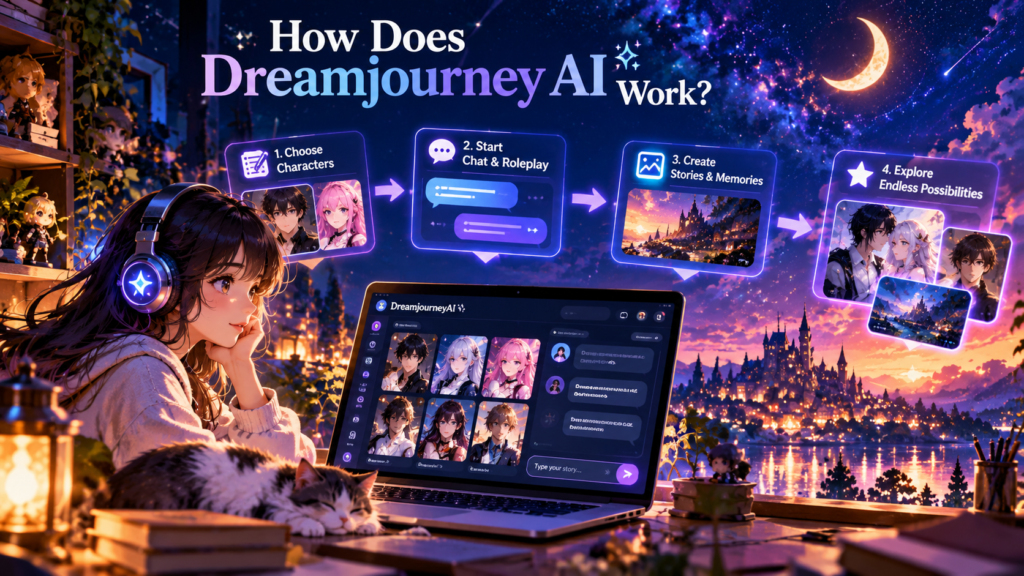
How Does Dreamjourney AI Work?
Dreamjourney AI works through conversations with AI-powered characters. After entering the platform, users can browse available characters or create their own. Each character can have a personality, scenario, and opening message that helps establish the roleplay. During a conversation, users respond naturally, while the AI generates the next part of the scene. This makes the experience feel closer to interactive fiction than a normal question-and-answer chatbot. The platform also allows users to control elements such as response length, point of view, narration, dialogue, and tense. These options can help make conversations better suited to different storytelling styles and personal preferences.
The platform also uses memory-focused tools to support longer stories. Its Memory Nexus system is designed to keep track of important information from conversations, including characters, locations, objects, and significant moments. According to the platform, this information can help maintain continuity as a story becomes longer. Users can also use Lorebooks to store important details about their fictional worlds, while branching tools allow them to explore different directions from an earlier scene. These features are especially useful when a story contains many characters or complicated events. However, users should still review important story details because AI systems can occasionally misunderstand or change information during long conversations.
Dreamjourney AI Characters and Roleplay
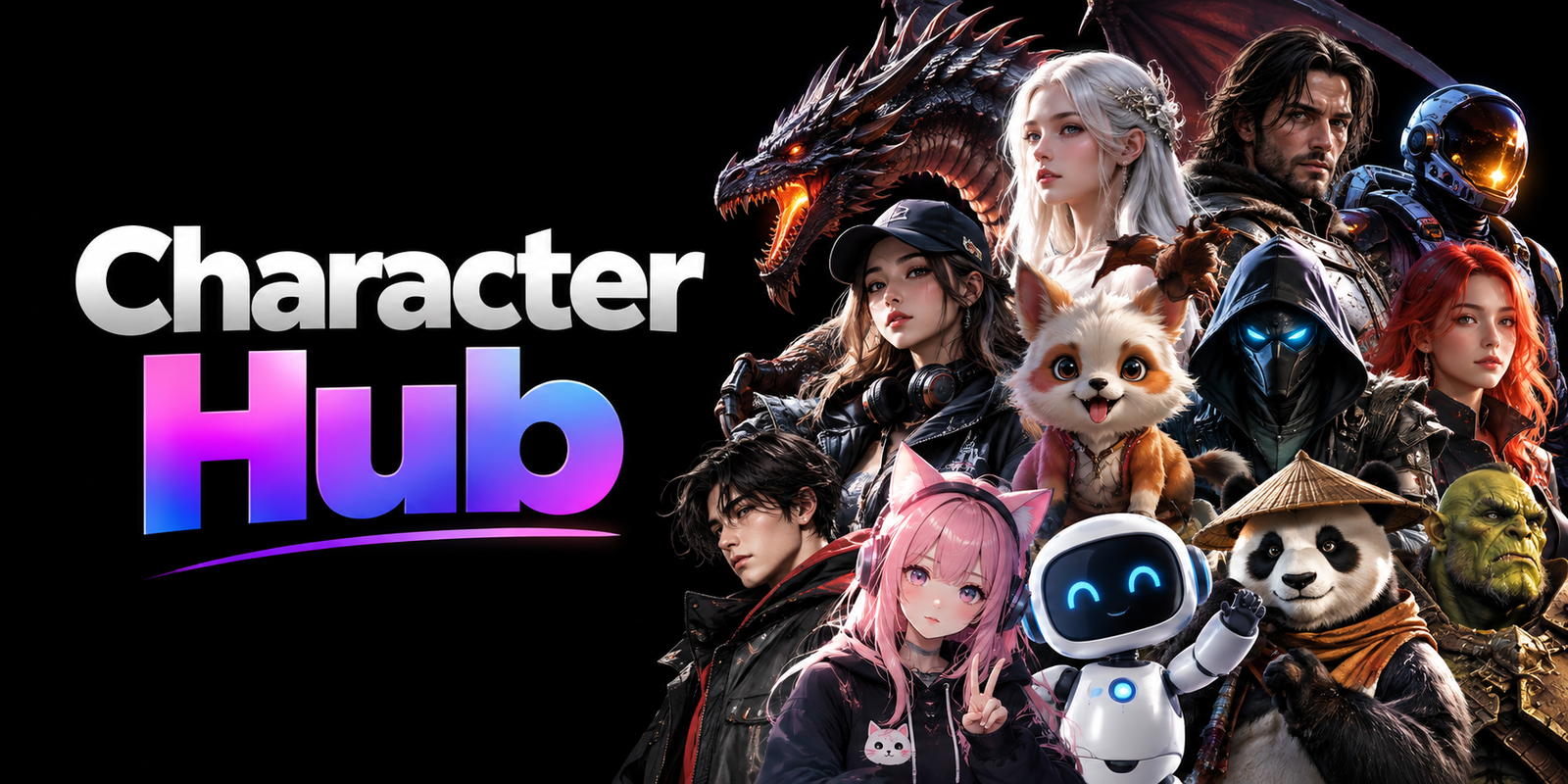
One of the biggest attractions of Dreamjourney AI is its collection of AI characters. The platform currently promotes more than 10,000 characters and worlds, covering different styles and genres. Examples shown on the website include fantasy, modern-day stories, roleplaying adventures, romance-style scenarios, science-fiction settings, and other fictional situations. Users can select a character and immediately begin a conversation. This approach is useful for people who want inspiration without spending time designing every part of a story themselves. Instead of starting with a blank page, users can begin with an established character and let the conversation gradually shape the narrative.
Users who prefer more control can also create their own AI characters. Dreamjourney AI allows creators to define a character’s personality, scenario, and first message before starting a private or shared experience. This makes the platform useful for writers who want to test dialogue, explore fictional personalities, or experiment with different story ideas. A custom character can also provide a consistent starting point for repeated conversations. However, users should remember that an AI character is still generated by software. Its responses can vary, and its personality may not always remain perfectly consistent. For creative experimentation, though, this flexibility can make roleplay more engaging and less predictable.
Memory Nexus and Long-Term Conversations
Memory is an important part of the Dreamjourney AI experience. The platform’s Memory Nexus is designed to help AI characters remember information from earlier parts of a conversation. It organizes details about people, places, objects, and important moments so they can influence later responses. This is particularly helpful in longer roleplaying sessions, where remembering earlier events can make a story feel more connected. The platform says Memory Nexus can update its records as a story develops and allows users to edit, lock, or undo changes. That gives users more control over which information remains important to their ongoing stories.
Long-term memory can make a major difference in interactive storytelling. Imagine creating a fantasy character who promises to protect a village, then returning to that storyline many conversations later. A useful memory system can help keep that promise relevant instead of treating every new message as a completely separate conversation. Dreamjourney AI combines its memory features with Lorebooks, which can store world-building information that should become relevant when certain details appear. Even so, memory should not be treated as perfect. Users creating complex stories may still need to correct details or update important information manually. That small amount of oversight can help keep longer fictional adventures more consistent.
Dreamjourney AI Storytelling Tools
Dreamjourney AI includes several tools designed to give users more control over storytelling. Director mode lets users guide the next response without writing the entire scene themselves. For example, a user can ask the story to increase tension, add more dialogue, slow down, or change the direction of an event. Branching features can also create another path from an existing conversation, allowing users to explore alternative outcomes. Regeneration provides another way to request a different response when the original version does not fit the story. Together, these tools turn AI storytelling into a more interactive process where users can shape the direction while the system handles much of the writing.
The platform also gives users controls over how generated responses should sound. Settings can include response length, point of view, tense, and the balance between dialogue and narration. These options matter because different stories need different writing styles. A short conversation may work best with concise replies, while a fantasy adventure might benefit from longer descriptions and more narration. Users can also build Lorebooks for recurring story elements, such as locations, characters, items, or important background information. These tools make Dreamjourney AI more flexible than a simple chatbot because the user can shape both the content and the way the story is presented.
Is Dreamjourney AI Free to Use?
Dreamjourney AI currently presents itself as free to start. Its homepage says new users can begin with 300 credits and do not need a card to get started. This makes the platform relatively easy to test before making a purchasing decision. However, users should always check the current account, credit, and payment information shown on the platform because online services can change their plans and limits over time. The free starting option is mainly useful for people who want to understand the interface and experience AI roleplay before deciding whether they want to continue using the service regularly.
A useful way to evaluate the service is to focus on what you actually want from it. If you only want occasional character conversations, the starting access may be enough to explore the platform. If you plan to create long stories or use advanced features frequently, you should review the current credit system and any available paid options before committing. Dreamjourney AI is primarily focused on storytelling and roleplay, so its value depends heavily on how often you use those features. Before paying for anything, users should check the latest terms, limits, and available features directly on the service. This helps avoid relying on outdated information from older reviews or social posts.
Quick Feature Chart
| Feature | What it offers |
|---|---|
| AI characters | Browse existing fictional characters |
| Custom characters | Build your own personalities and scenarios |
| Memory Nexus | Helps retain important story information |
| Lorebooks | Store recurring world and story details |
| Director mode | Guide the direction of a scene |
| Story branching | Explore alternative story paths |
| Response controls | Adjust length, viewpoint, tense, and narration |
| Free starting access | Begin with 300 credits, according to the platform |
Privacy and Safety on Dreamjourney AI
Privacy is an important consideration when using any AI chat service. Dreamjourney AI states that conversations, character creations, and Lorebook entries are private by default. The platform also says users have control over what they choose to share with the community. These statements provide useful information, but users should still read the current privacy policy and terms before sharing sensitive information. AI platforms can process conversation data as part of providing their services, and privacy policies explain how that data is handled. A good general rule is to avoid entering passwords, financial details, private documents, or other information that you would not want stored by an online service.
There is also an important age requirement to understand. Dreamjourney AI’s current Terms of Service state that users must be at least 18 years old to access the app. This means younger users should not create accounts or use the service. Adults should also remember that AI roleplay can produce unexpected content depending on the character, prompt, and conversation. Using clear boundaries and reviewing privacy settings can make the experience more responsible. If you are creating characters or sharing stories publicly, think carefully about personal information, copyrighted material, and details that could identify real people. Responsible use is especially important when fictional conversations become long or highly personal.
Who Should Use Dreamjourney AI?
Dreamjourney AI may be useful for people who enjoy interactive fiction and want more freedom than traditional stories provide. It can appeal to creative writers, roleplaying fans, fantasy readers, gamers, and people who simply enjoy experimenting with fictional conversations. The platform’s character library provides ready-made starting points, while custom character tools allow users to build their own ideas. Writers can also use the service to explore dialogue or test how fictional characters might react to different situations. However, it should be viewed primarily as a creative entertainment platform rather than a replacement for professional writing software, factual research tools, or expert advice.
The platform may be less suitable for people looking for a general-purpose productivity assistant. Someone who mainly needs help with spreadsheets, business research, coding, or factual questions may prefer a different type of AI tool. Dreamjourney AI is designed around characters, stories, roleplay, and creative interaction. Its strongest features support those activities rather than traditional office work. Before choosing it, consider your main goal. If you want an AI companion for fictional storytelling, its memory and character tools may be valuable. If your goal is everyday productivity, compare it with AI services built specifically for writing, research, coding, or work tasks.
How to Get Started With Dreamjourney AI
Getting started with Dreamjourney AI is straightforward. The platform says users can select the Start Free option, create an account, and begin exploring characters and stories. New users can browse the available character library before deciding what type of experience they want. You can then select an existing character or create your own. Once a conversation starts, give the character clear information about the scene, your role, and what you want to happen next. Clear prompts usually make creative interactions easier to guide. If you want longer stories, consider setting up a Lorebook and using memory features to organize important information.
For better results, begin with a simple scenario rather than giving too many instructions at once. Explain who your character is, where the scene takes place, and what kind of tone you want. You can then use Director mode when you want to change the pace or direction. If a response does not fit, regeneration or branching can help you explore another option. Remember that AI storytelling works best as a creative collaboration. The user provides the ideas and decisions, while the AI generates possible scenes and dialogue. Experimenting with different characters, settings, and response controls can help you discover which style works best for your stories.
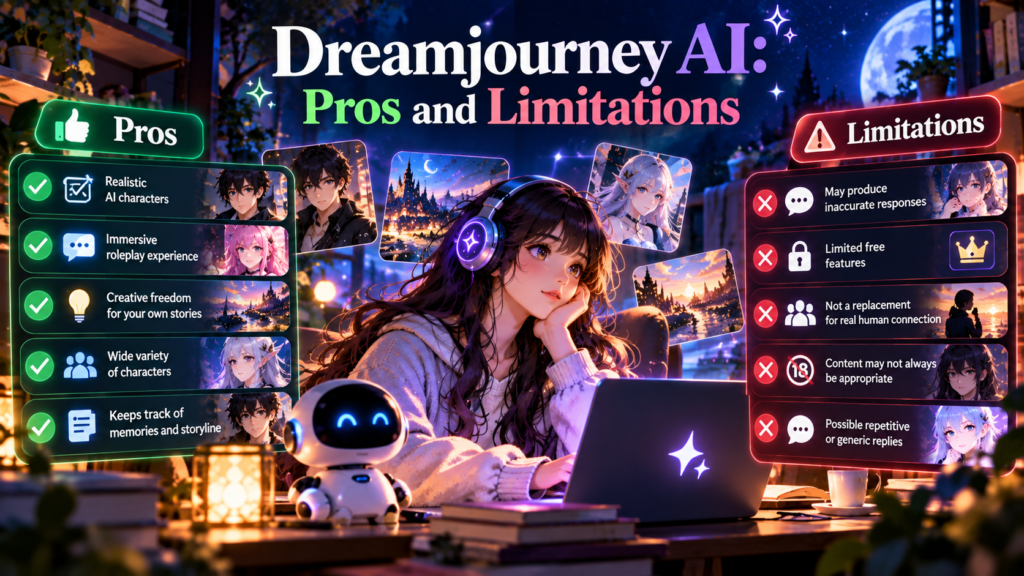
Dreamjourney AI: Pros and Limitations
Dreamjourney AI has several strengths for people interested in interactive storytelling. Its large character library can provide quick inspiration, while custom character creation gives users more control. Memory Nexus is designed to support longer conversations, and Lorebooks can help preserve important world-building information. Director mode and branching also give users ways to change a story without restarting everything. Another benefit is the platform’s free starting access, which lets users explore the service before deciding whether it suits them. These features make it an interesting option for adults who enjoy AI roleplay, creative writing experiments, and fictional worlds.
There are also limitations to consider. AI-generated stories can sometimes contain mistakes, inconsistent details, or unexpected responses. Memory tools can improve continuity, but they do not guarantee perfect recall. The platform is also intended for users aged 18 and above, which limits its audience. In addition, people who need factual accuracy or professional productivity tools may find a dedicated AI assistant more appropriate. Pricing, credits, features, and available characters can change, so users should check the official service before making decisions.
Frequently Asked Questions
What is Dreamjourney AI used for?
Dreamjourney AI is mainly used for AI character chat, interactive roleplay, and storytelling. Users can choose existing characters, create custom characters, build fictional worlds, and guide conversations through different tools. The platform is designed for creative entertainment rather than general productivity. Its memory and storytelling features are intended to make longer fictional conversations more connected.
Is Dreamjourney AI free?
Dreamjourney AI says users can start for free with 300 credits and without entering a card. However, credit systems and available plans can change. Users should check the current platform information before relying on specific limits or pricing. Free access is useful for testing the service and deciding whether its storytelling features match your needs.
Does Dreamjourney AI remember conversations?
Dreamjourney AI offers Memory Nexus, a system designed to retain important story information. It can track people, places, objects, and significant moments from longer stories. Users can also use Lorebooks to save recurring information. However, AI memory is not guaranteed to be perfect, so important details may still need occasional corrections or updates.
Can I create my own AI character?
Yes. Dreamjourney AI allows users to create custom characters by defining details such as personality, scenario, and opening message. This gives users more control than simply selecting a ready-made character. Custom characters can be kept private or shared, depending on how the creator chooses to use the platform.
Is Dreamjourney AI suitable for children?
No. The current Dreamjourney AI Terms of Service state that users must be at least 18 years old. Parents and guardians should therefore prevent children from using the service. Adults should also review the platform’s current terms and privacy information before creating an account or sharing personal information.
Conclusion
Dreamjourney AI offers a focused approach to AI-powered storytelling, character conversations, and roleplay. Its main strengths include a large character library, custom character creation, Memory Nexus, Lorebooks, Director mode, and story branching. These tools give users more control over fictional experiences while allowing the AI to handle much of the dialogue and scene generation. The service is free to start, but users should check current credits, plans, terms, and privacy information before using it extensively. Most importantly, Dreamjourney AI is designed for adults and creative entertainment rather than everyday productivity. If interactive stories sound appealing, exploring its free starting experience can help you decide whether it fits your style.
















1 comment on “Dreamjourney AI: AI Roleplay, Characters and Stories”