



Character tavern is a term used to describe a digital gathering place where people explore conversations with fictional characters, AI personalities, and creative roleplay companions. Like a traditional tavern in a fantasy story, it brings different personalities together in one setting. Depending on the platform, users may discover characters, start conversations, or create their own imaginative scenarios. The experience can appeal to readers, writers, gamers, and people interested in artificial intelligence. However, the exact features depend on the website or application using this name. Understanding its purpose helps users choose suitable tools and enjoy creative conversations with realistic expectations.
The idea combines storytelling with modern conversational technology. Instead of reading only a character’s dialogue, users can actively participate in the story. A fantasy hero might discuss a quest, while a detective could help develop a mystery. These interactions may support entertainment, writing practice, and creative brainstorming. However, not every character tavern platform offers the same experience. Some focus on roleplay, while others emphasize character creation or community interaction. Before using one, check its available features, privacy information, and content rules. This guide explains the concept, common uses, practical considerations, and ways to explore it responsibly.
Understanding the Character Tavern Concept
A character tavern usually centers on personalities rather than ordinary question-and-answer conversations. Users may select a character with a particular background, personality, speaking style, or fictional history. The character then responds according to its instructions and the conversation’s context. This creates an experience similar to interactive fiction. For example, a user could speak with a medieval merchant, a space explorer, or an imaginary teacher. The conversation may develop differently depending on the user’s questions. However, responses are generated or guided by software, so they should not be confused with real human experiences.
The word “tavern” also suggests a social setting. In fantasy games and novels, taverns often introduce characters, stories, and adventures. Digital platforms may use a similar idea to make conversations feel welcoming and creative. A character tavern could therefore describe a specific service, a themed community, or a general style of AI interaction. The name alone does not confirm a particular company’s features or ownership. Users should identify the exact platform before relying on claims about its tools. This distinction matters because similarly named services can have different functions, policies, and user experiences.
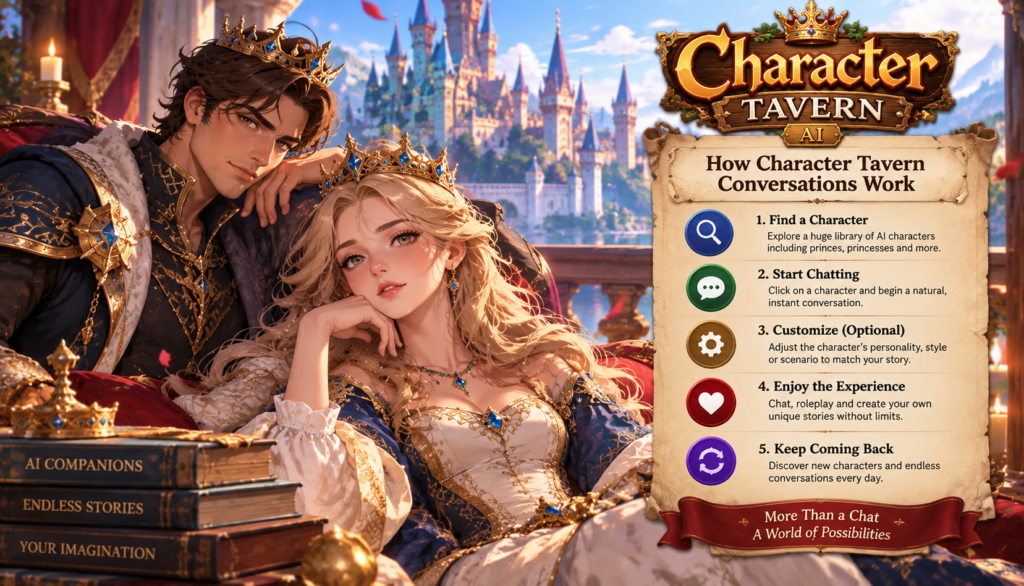
How Character Tavern Conversations Work
Many AI character platforms use language models to generate replies. These systems process the conversation, character instructions, and available context before producing an answer. A character profile may include its name, personality, setting, and preferred speaking style. The system uses this information to create responses that fit the selected role. For instance, a fictional librarian may answer in a calm and thoughtful manner. A pirate character may use different expressions. The quality of the interaction depends on the platform’s technology, instructions, context management, and the user’s prompts.
A typical conversation begins when someone chooses a character or creates a new one. The user then sends a message describing a question, action, or situation. The character responds, and the story continues through additional messages. Some platforms may include tools for editing characters, saving conversations, or creating scenarios. Others may offer community-created personalities. These features are not universal, so users should read the platform’s current documentation. A clear understanding of the available tools makes it easier to build useful conversations and avoid unrealistic expectations about character memory or accuracy.
Main Features to Explore
The most useful features depend on the specific character tavern service. Character discovery may allow users to browse personalities by theme, genre, or purpose. Character creation tools can help writers design original personalities with backgrounds and speaking styles. Conversation history may make it easier to continue a story later. Some services also provide settings for adjusting response behavior. However, feature availability can change over time. Users should check official product information instead of assuming that every platform supports the same tools or subscription options.
A character profile can make conversations more consistent. Useful details may include the character’s name, role, personality, goals, and relationship to the setting. A short example dialogue can also show how the character should speak. For example, a fantasy guide might use clear language and offer practical advice during an adventure. A mystery character might ask questions before revealing clues. These details help establish a recognizable voice. Still, AI characters can produce unexpected answers, repeat information, or forget earlier details. Good character design improves the experience but cannot guarantee perfect consistency.
Creative Uses for Writers and Gamers
Character tavern conversations can support creative writing in several ways. Writers may use fictional characters to test dialogue, explore story ideas, or develop imaginary settings. A conversation with a detective could reveal possible clues for a mystery. A discussion with a fantasy ruler might help a writer understand a fictional conflict. These activities can encourage brainstorming without replacing the writer’s own judgment. The strongest results usually come from treating AI responses as suggestions rather than finished creative work. Writers should revise ideas, check originality, and maintain their own voice.
Gamers may also enjoy interactive storytelling through character-based conversations. A user could create a companion for a roleplaying adventure or practice dialogue before a game session. The experience may help players explore personalities, relationships, and fictional worlds. However, an AI character is not necessarily connected to an actual game or official storyline. It may invent details that do not match the game’s established lore. Users who care about accuracy should compare responses with official game information. This is especially important when using conversations to prepare content for publishing, streaming, or fan communities.
Character Tavern Benefits and Limitations
The main benefit of character-based AI is interactive creativity. Users can explore ideas through dialogue instead of working only with blank pages. This may make brainstorming more engaging for people who enjoy stories and fictional personalities. Conversations can also provide practice with writing, language learning, and communication. For example, a learner might practice a simple conversation with a fictional shopkeeper. A writer might test how two characters respond to a difficult decision. These activities can be useful when users understand that the responses are generated and may contain mistakes.
There are also important limitations. AI characters can misunderstand questions, provide incorrect information, or behave inconsistently. Some platforms may have limits on free messages, conversation length, or character customization. Privacy policies may differ, particularly when conversations are stored or shared. Users should avoid entering passwords, private documents, financial details, or sensitive personal information. They should also consider whether a platform’s content rules suit their needs. A helpful experience depends not only on creative features but also on privacy awareness, responsible use, and realistic expectations.
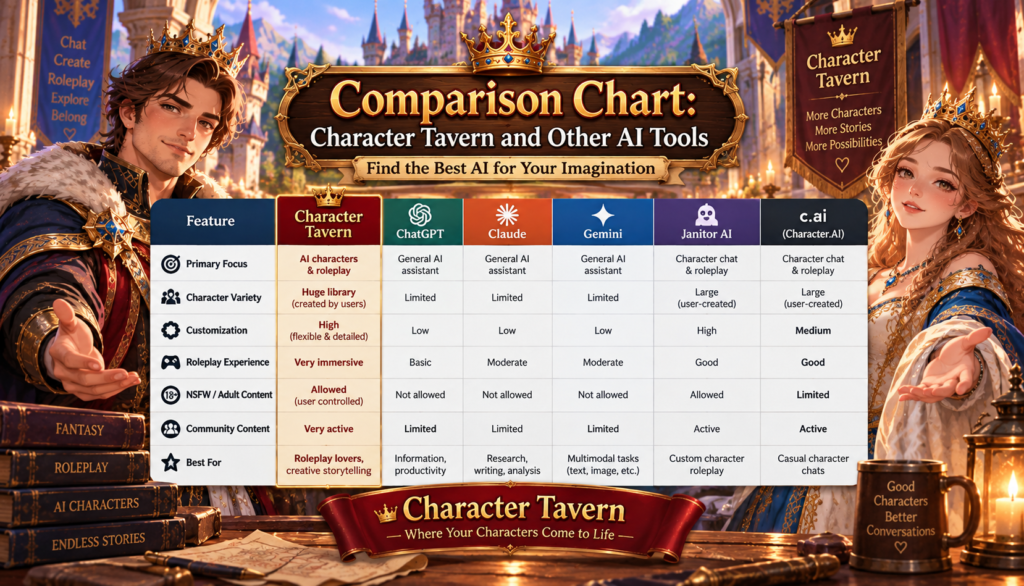
Comparison Chart: Character Tavern and Other AI Tools
The following chart explains how character tavern-style experiences compare with other common digital tools. It describes general categories, not verified features of one specific platform.
| Tool Type | Main Purpose | Typical Strength | Important Consideration |
|---|---|---|---|
| Character-based AI | Fictional conversations | Interactive storytelling | Responses may be inconsistent |
| General AI assistant | Questions and tasks | Broad information support | May not maintain a fictional role |
| Writing software | Drafting and editing | Organizing written work | Usually lacks interactive characters |
| Video game NPCs | Game-world interaction | Connected gameplay | Limited to the game’s design |
| Online communities | Social discussion | Human perspectives | Requires community moderation |
This comparison shows why users should identify their main goal before choosing a tool. Someone seeking imaginative dialogue may prefer a character-focused service. Someone researching a real topic may need a general AI assistant and reliable sources. A writer organizing chapters may benefit from dedicated writing software. Meanwhile, a gamer seeking official story interaction may prefer in-game characters. These categories can overlap, but they are not identical. Choosing based on purpose helps users avoid confusion and find a more suitable experience.
Creating Better Character Conversations
A clear opening message can improve a character tavern conversation. Explain the setting, the character’s role, and what you want to accomplish. Instead of writing “Tell me a story,” try describing a specific situation. For example, “You are a village guide helping a traveler find a lost map. Ask one question before giving advice.” This gives the system useful direction. You can also request a particular tone, such as friendly, mysterious, educational, or humorous. Short, clear instructions are often easier for a character system to follow.
It is also helpful to correct problems politely during the conversation. If a character forgets an important detail, repeat the relevant information and explain what should remain consistent. If the response becomes too long, ask for shorter answers. If the story moves in an unwanted direction, describe the change you prefer. Users should remember that different platforms handle instructions differently. Some may follow corrections well, while others may need repeated guidance. Experimenting with prompts can improve results, but no instruction guarantees that every response will be accurate or consistent.
Privacy, Safety, and Responsible Use
Before using a character tavern service, review its privacy policy and terms of use. Look for information about conversation storage, account security, data sharing, and deletion options. Avoid sharing personal details that are unnecessary for the activity. This includes passwords, identity documents, private business information, and financial data. Parents and guardians should also review age requirements and content controls when children may access AI character services. A platform’s policies can change, so checking current information is more reliable than relying on old reviews or assumptions.
Responsible use also means keeping fictional conversations separate from real-world facts. An AI character may sound confident while inventing information. This can happen during discussions about history, medicine, law, or current events. For important questions, consult reliable sources and qualified professionals. Users should also respect copyright, privacy, and community rules when creating or sharing characters. Avoid presenting AI-generated claims as verified facts. With sensible boundaries, character-based conversations can remain enjoyable while supporting creativity, learning, and thoughtful digital habits.
How to Choose a Character Tavern Platform
Choosing a character tavern platform starts with identifying what you want to do. If your goal is storytelling, look for character customization and useful conversation controls. If you want to practice writing, consider tools that support clear dialogue and saved sessions. If you prefer community interaction, review moderation rules and public-sharing options. A platform’s appearance may be attractive, but its actual features matter more. Check official documentation, pricing details, privacy policies, and user requirements before creating an account or paying for access.
It is also useful to test a service with a simple conversation. Ask the character a few questions and see whether it follows the selected personality. Check whether the interface is easy to understand and whether important settings are visible. Consider response quality, conversation limits, and the ability to delete or export content. Reviews can offer useful experiences, but they may describe older versions or individual preferences. A careful trial helps you decide whether the platform supports your needs without relying on exaggerated claims.
Frequently Asked Questions
What is character tavern used for?
Character tavern is generally associated with interactive conversations involving fictional personalities or AI characters. People may use these experiences for entertainment, creative writing, roleplay, language practice, or brainstorming. The exact purpose depends on the platform. Because the name may describe different services, users should check the official website for current features and available tools.
Is character tavern free to use?
Some character-based AI services offer free access, while others use subscriptions, message limits, or paid features. The pricing of a specific character tavern platform cannot be confirmed from the keyword alone. Before signing up, check the official pricing page for current plans, usage limits, account requirements, and any charges associated with additional features.
Can character tavern help with writing?
Yes, character-based conversations can help writers explore dialogue, personalities, settings, and story ideas. A writer might use a fictional character to test a scene or brainstorm possible conflicts. However, AI responses should be reviewed and edited. Writers should also check originality, avoid copying protected material, and preserve their own creative judgment.
Are character tavern conversations accurate?
Accuracy depends on the platform, language model, character instructions, and subject. Fictional conversations are designed for creative interaction, not guaranteed factual research. AI characters can invent details or misunderstand questions. For important information, use reliable sources and qualified experts. Do not treat a confident fictional response as proof that something is true.
How can users improve character tavern conversations?
Users can improve conversations by providing clear instructions, describing the setting, and explaining the character’s role. Specific prompts often work better than vague requests. If the character forgets something, repeat the important detail. You can also request a different tone, shorter replies, or a new direction. Results vary across platforms, so experimentation is useful.
Conclusion: Exploring Character Tavern in 2026
Character tavern represents an interesting approach to interactive storytelling and AI-powered conversations. It can help users explore fictional personalities, develop creative ideas, practice dialogue, and enjoy imaginative scenarios. However, the exact features and identity of any platform using this name should be verified through official information. Users should also consider privacy, pricing, content rules, and the limits of AI-generated responses. Whether you are a writer, gamer, student, or curious reader, a clear purpose will help you get more value from character-based tools. Explore thoughtfully, test the available features, and use reliable sources whenever factual accuracy matters.




















1 comment on “Character Tavern: A Complete Guide for 2026”