



FictionLab AI is an interactive storytelling and roleplay platform designed for people who enjoy creating fictional worlds and characters. Instead of simply asking an AI chatbot questions, users can enter scenarios and continue stories through ongoing conversations. The platform lets users explore community-created scenarios or build their own experiences. FictionLab also provides tools for creating scenarios, customizing characters, and generating images. Because storytelling can take many forms, users can explore genres such as fantasy, romance, science fiction, mystery, horror, adventure, and role-playing games. This makes FictionLab AI useful for creative entertainment and interactive fiction.
For someone discovering the platform, the main idea is simple: create or choose a fictional situation, then interact with it through AI. The platform’s scenario system can contain world information, characters, locations, rules, and other details that guide the experience. Users can also explore scenarios made by other creators through categories and popularity-based discovery. This community element adds variety because users can experience stories created by different writers rather than relying only on their own ideas. If you are researching AI storytelling tools, FictionLab AI is worth understanding because it focuses specifically on interactive fiction rather than general-purpose conversations.
What Is FictionLab AI?
FictionLab AI is built around interactive AI roleplay and scenario-based storytelling. Users can participate in existing fictional situations or create their own scenarios. A scenario may define characters, settings, relationships, story rules, and other information that helps guide the AI during conversations. This approach makes the experience feel more like an evolving story than a standard question-and-answer chatbot. The platform also has a community where creators publish scenarios for other people to discover and play. This community element adds variety because users can experience stories created by different writers rather than relying only on their own ideas.
The service also provides a creation area where users can build scenarios through different creation options. The platform presents a guided wizard and an advanced editor, alongside options for generating images. This gives beginners a simpler starting point while providing more control for experienced creators. FictionLab AI can therefore serve two different purposes: discovering interactive stories and designing original ones. For example, someone could create a fantasy kingdom with several characters, while another user could design a detective mystery set in a modern city. The exact experience depends on how the scenario is designed and configured.
How Does FictionLab AI Work?
The basic process starts with selecting an existing scenario or creating a new one. When creating a scenario, users can provide information about the fictional world, characters, locations, and story behavior. These details help establish the context for the AI. Clear descriptions and useful triggers can help guide the AI during conversations. Instead of writing huge amounts of unnecessary information, creators can focus on details that genuinely affect the story. This can make characters more consistent and help the AI understand important parts of the fictional setting.
Once a scenario is ready, the user interacts with it through AI-generated responses. The conversation can develop according to the user’s choices and the scenario’s established information. For example, imagine a fantasy story where you play a traveler entering a mysterious village. The scenario could define the village, important characters, local history, and hidden conflict. As you interact with the characters, the AI can use those details to continue the fictional experience. This structure makes FictionLab AI different from simply requesting a one-time story because the interaction can continue across multiple messages and decisions.
FictionLab AI Features to Know
FictionLab AI offers several tools aimed at interactive storytelling and roleplay. These include scenario discovery, scenario creation, community features, and image generation. The platform also organizes scenarios using numerous genres and themes, including fantasy, anime, romance, action, mystery, science fiction, historical settings, horror, adventure, and many others. This variety can help users quickly find an experience matching their interests. Creators can also build their own scenarios when they cannot find an existing story that fits their idea.
The platform also supports features such as AI models, scenario customization, roleplay conversations, community-created content, message editing, and message regeneration. Users can create and customize scenarios while exploring different storytelling styles. However, available features, models, pricing, and access can change over time. The platform is intended for adults, with content that may include mature themes. Users should therefore review the current terms, age requirements, and content information before using the service.
Creating Your Own FictionLab AI Scenario
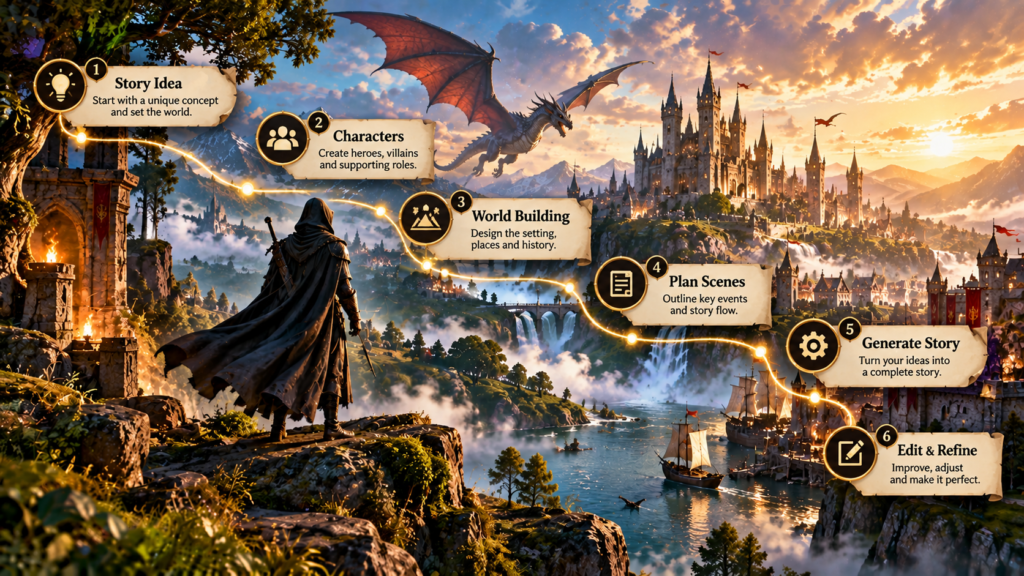
Creating a scenario can be one of the most interesting parts of FictionLab AI. A strong scenario usually starts with a clear premise. You can then describe the main characters, their personalities, relationships, locations, and important world details. Using separate information cards can help when different details need to activate only in particular situations. Consistent triggers can also help the AI understand when specific information becomes relevant. These techniques can help prevent a scenario from becoming overloaded with unnecessary information while keeping important story elements available.
For example, you could create a science-fiction scenario about a damaged spaceship traveling through an unknown galaxy. The world card could explain the ship and its mission. Character cards could describe the captain, engineer, and mysterious passenger. Location information could explain the bridge, engine room, and medical bay. Then, specific triggers could activate information when the characters enter certain areas or discover important clues. Keeping individual information sections manageable can make the scenario easier to maintain. For more content ideas, you can also explore our AI storytelling guide and AI tools for writers articles.
Popular Genres on FictionLab AI
One major attraction of FictionLab AI is its broad selection of fictional genres. Users can explore categories covering fantasy, romance, anime, action, mystery, science fiction, horror, historical stories, adventure, comedy, superheroes, cyberpunk, time travel, and many other themes. This means users are not restricted to one storytelling style. Someone interested in fantasy can explore magical worlds, while another person can choose detective stories or futuristic adventures. The community-created format also means new scenarios can introduce different characters, settings, and story ideas.
Genre selection can also make it easier for beginners to understand what kind of experience they want. For instance, a user who enjoys slow storytelling might choose a cozy or slow-paced scenario. Someone looking for action could search for adventure, superhero, thriller, or combat themes. The platform also includes relationship and character-focused categories, alongside settings such as medieval, urban, rural, space, and virtual worlds. Because categories are extensive, users may need to experiment with different options before finding the exact style they prefer. This flexibility is useful for discovering unusual storytelling concepts.
FictionLab AI for Writers and Creators
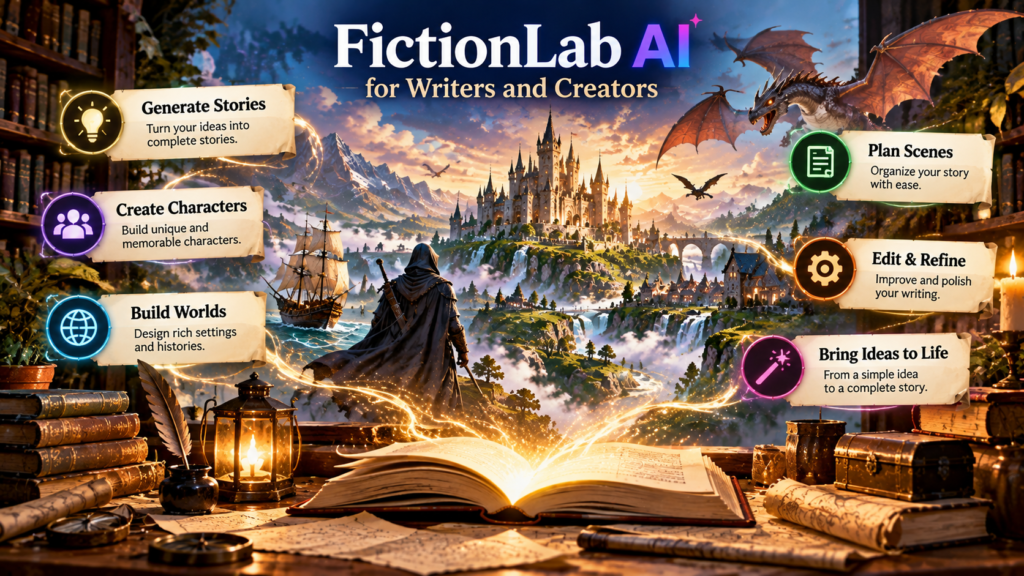
FictionLab AI can also be useful for people who enjoy designing fictional experiences. Instead of writing a complete story from beginning to end, creators can establish a world and let interactive conversations develop it. This format allows characters to respond dynamically to user actions. Creators can define personalities, relationships, settings, rules, and story mechanics to create a more structured experience. Detailed world-building can include systems for relationships, drama, time progression, and other story elements.
However, good scenario design requires more than simply adding lots of text. Clear information is usually more useful than long descriptions filled with unnecessary details. Precise descriptions, useful triggers, and consistent labeling can help creators organize their scenarios. A creator could therefore spend more time defining how an important character behaves rather than describing every small object in a room. This approach can make the scenario easier to maintain and give the AI clearer information to work with. For writers experimenting with interactive fiction, this provides a practical way to test characters and story concepts.
Is FictionLab AI Free to Use?
FictionLab AI offers free access to parts of its platform, while additional features may involve paid options. The service includes in-app purchases and premium access options. Because pricing and available models can change, users should check the latest official information before subscribing. This is especially important if you plan to use advanced AI models regularly. A free experience can be useful for testing the platform before deciding whether additional features are worth paying for.
The best approach is to begin with the features available to you and understand how the platform works. Try several scenarios, test the conversation quality, and explore the creation tools before making a purchase. Also check whether your preferred models or features require additional credits, subscriptions, or other payments. Since services can update their pricing and plans, information found in older reviews may not reflect current costs. Always check the latest details before spending money on the service.
FictionLab AI: Simple Feature Overview
| Feature | What It Offers |
|---|---|
| AI Roleplay | Interactive conversations with fictional characters |
| Scenario Creation | Tools for building custom fictional experiences |
| Character Design | Custom character information and personalities |
| World Building | Settings, lore, locations, and story details |
| Community | Scenarios created and shared by users |
| Image Generation | Tools for creating images within the platform |
| Genre Discovery | Categories for different storytelling styles |
| Advanced Editing | Greater control for experienced scenario creators |
This overview shows why FictionLab AI is primarily designed around interactive fiction rather than ordinary chatbot use. The platform combines AI conversations with scenario design and community discovery. Users can approach the service in different ways. A beginner might simply select a ready-made scenario, while an experienced creator could build a detailed fictional world with characters, locations, and custom rules. The available tools may change as the platform develops.
The biggest appeal is the combination of storytelling and interaction. Instead of reading a fixed story, users can influence the conversation through their own messages and choices. This creates a more personal experience. Creators also have opportunities to experiment with different narrative structures. For example, a mystery scenario could reveal clues gradually, while a fantasy scenario could allow users to explore a fictional world freely. This flexibility makes the platform suitable for people who enjoy both reading and actively participating in stories.
Is FictionLab AI Safe for Everyone?
Age suitability is an important consideration when researching FictionLab AI. The platform is intended for adults and may contain mature themes, including sexual content. This means parents and younger users should not treat FictionLab as a general-purpose children’s storytelling application. Adults should also understand that community-created platforms can contain a wide variety of themes. Reviewing the platform’s current terms, privacy information, and content settings is sensible before creating an account or sharing personal information.
Privacy is another area worth checking before using any AI platform. Users should review the current privacy information and understand how conversations and account data may be handled. It is also sensible to avoid sharing sensitive personal information inside fictional conversations. A good rule is simple: treat AI chats as digital services and carefully consider what information you choose to enter. These precautions are useful when using FictionLab AI or any other interactive AI application.
Frequently Asked Questions About FictionLab AI
What is FictionLab AI?
FictionLab AI is an interactive storytelling and roleplay platform. Users can choose community-created scenarios or build their own fictional experiences. The platform focuses on AI-driven characters, conversations, world-building, and scenario design. It supports many genres, including fantasy, romance, science fiction, mystery, horror, adventure, and role-playing themes.
Can I create my own scenarios?
Yes. FictionLab AI provides tools for creating custom scenarios. The creation system allows users to define characters, worlds, locations, rules, and other story information. This gives creators the ability to build interactive stories around their own ideas rather than relying only on existing community scenarios.
Does FictionLab AI have a mobile app?
Yes. FictionLab AI has a mobile application. The app provides access to roleplay scenarios, AI models, community features, editing tools, and other storytelling functions. Availability can depend on your device and region, so users should check their relevant app store for the latest information.
Is FictionLab AI free?
FictionLab AI provides access to some features for free, while additional options may require payment. The platform also offers in-app purchases and premium features. Because pricing and available plans can change, users should check the current pricing information before subscribing or purchasing credits.
Who should use FictionLab AI?
FictionLab AI is mainly aimed at adults interested in interactive fiction, roleplay, character creation, and AI storytelling. The platform can appeal to writers, roleplay fans, world-builders, and people who enjoy interactive narratives. Users should review current age requirements and content policies before using the service.
Conclusion: Is FictionLab AI Worth Exploring?
FictionLab AI is an interactive storytelling platform focused on AI roleplay, custom scenarios, characters, and fictional worlds. Its main difference from ordinary chatbots is the scenario-based approach, where creators can establish characters, settings, rules, and story information before conversations begin. The platform also offers community-created scenarios, extensive genre categories, creation tools, and image generation. However, users should consider its adult-oriented content and review pricing and privacy information before using the service. If interactive fiction interests you, exploring a few scenarios first can help you understand whether FictionLab AI fits your creative style and expectations. It provides a flexible space for discovering and creating AI-powered fictional experiences.





















1 comment on “FictionLab AI: Interactive Stories, Features & Guide”