


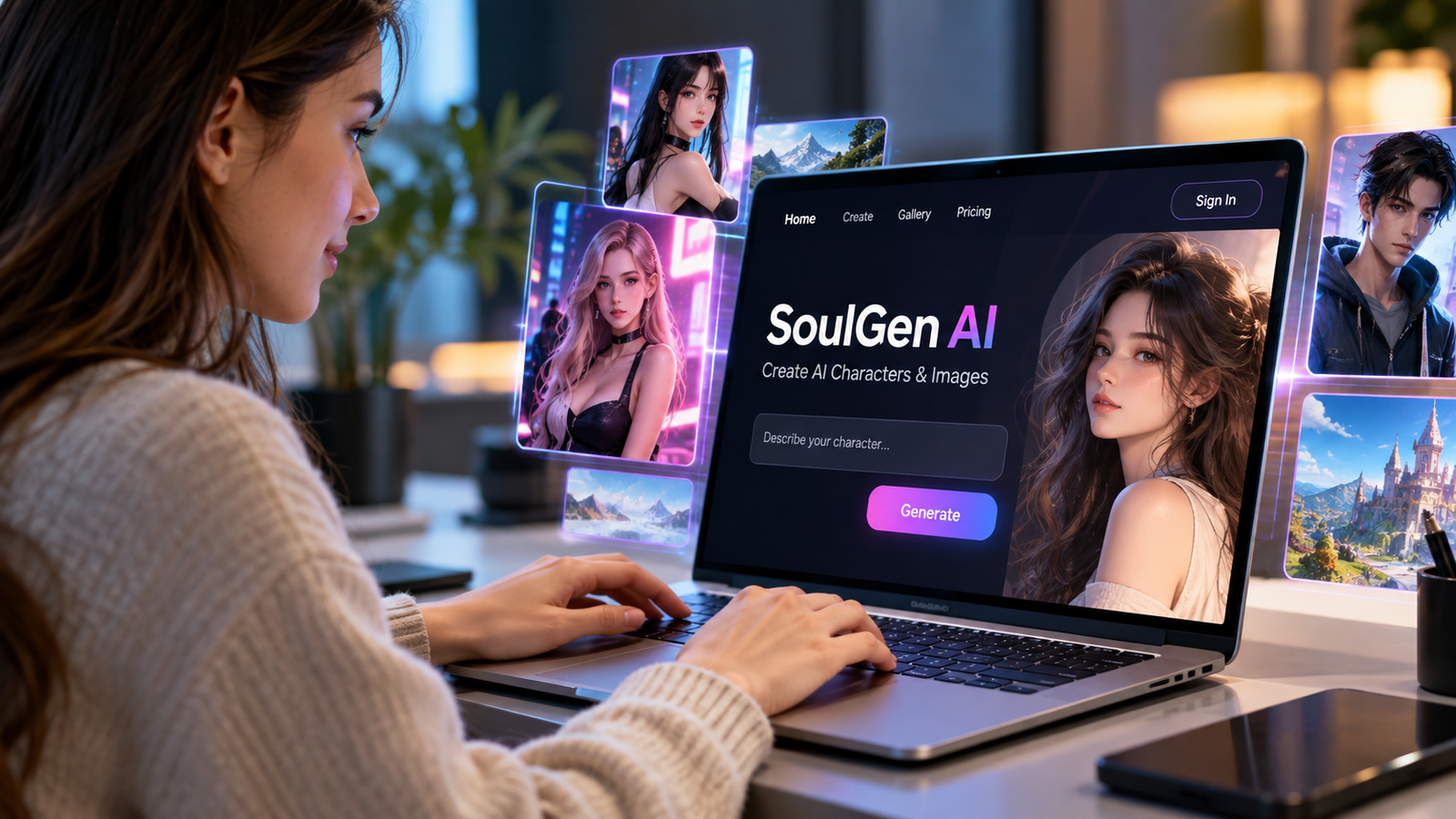
Soulgen is an AI image generation platform designed to help users create digital images from written prompts. Instead of drawing or editing everything manually, users can describe an idea and let artificial intelligence generate a visual result. This makes the tool interesting for people exploring AI art, character creation, creative concepts, and digital content. Soulgen may also appeal to beginners because prompt-based creation does not require advanced design skills. However, results can vary depending on the prompt, settings, and type of image requested. In this guide, we explain what Soulgen is, how it works, its common uses, important limitations, and practical tips for getting better results.
What Is Soulgen?
Soulgen is an AI-powered image creation service that turns text descriptions into generated visuals. The basic idea is simple: users provide a written prompt describing a character, appearance, setting, clothing, pose, or artistic concept. The system then processes that description and produces an image based on the information provided. Like other generative AI tools, Soulgen uses trained models to interpret language and create visual patterns. The exact quality of an output depends on the prompt and available generation options. Users should therefore treat generated images as creative results rather than guaranteed reproductions of their exact instructions every time.
Soulgen can be useful for several types of creative projects. Someone might use it to explore character concepts before creating a larger project, while another person may want ideas for fictional scenes or digital artwork. It can also help users experiment with different visual styles without learning complicated editing software first. However, AI-generated content still needs human review. Images can contain unexpected details, inconsistent features, or visual errors. Users should check every result carefully before publishing or using it commercially. Understanding these limitations helps create more realistic expectations and leads to better decisions when using AI image generators.
How Does Soulgen Work?
The process begins when a user enters a text prompt describing the desired image. A useful prompt can mention the subject, environment, clothing, composition, lighting, camera perspective, and overall visual mood. Soulgen then interprets those instructions through its AI image-generation system. The resulting picture is based on the relationships the model has learned from its training data. Because AI does not understand prompts exactly like humans do, wording can affect the final image significantly. Clear descriptions usually provide stronger guidance. Users may need several attempts before reaching a result that closely matches their original creative idea.
For example, imagine someone wants a realistic portrait of a fictional character standing beside a modern building. A vague prompt might produce a result with unexpected clothing or background details. A more specific prompt could describe the character’s age range, hairstyle, outfit, location, lighting, camera angle, and composition. This gives the generation system more useful information. However, adding too many conflicting instructions can also reduce consistency. A practical approach is to start with the main subject and scene, then refine the prompt gradually. This makes it easier to understand which changes actually improve the generated image.
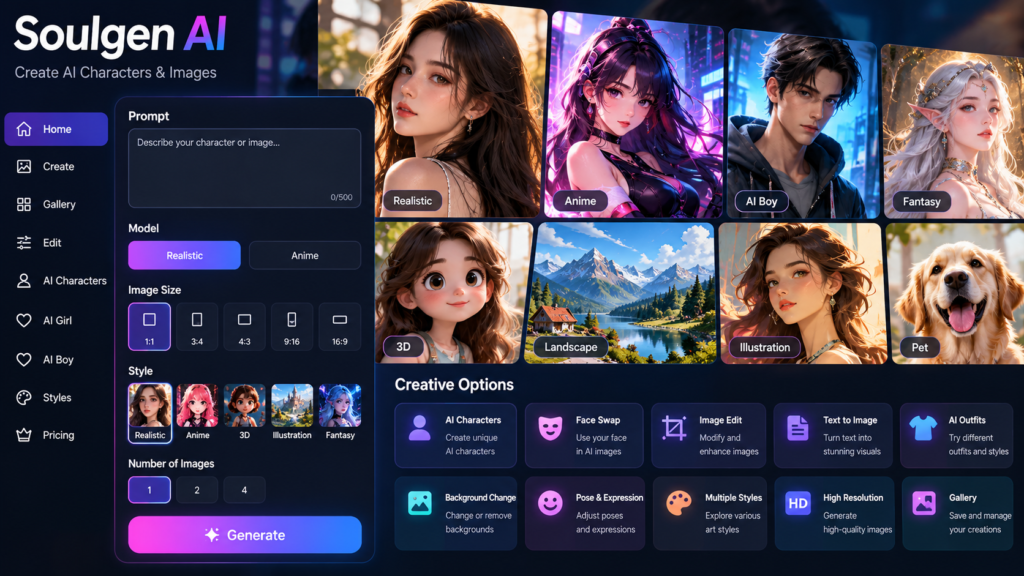
Soulgen Features and Creative Options
One reason users explore Soulgen is the range of creative possibilities offered by AI image generation. Depending on the current version and available access, users may be able to generate characters, portraits, scenes, and other visual concepts from text. Some AI image platforms also provide options for modifying or refining generated results. These features can make the creative process more flexible than traditional image creation. However, available tools, limits, pricing, and generation options can change over time. Users should always check the current service interface and terms before relying on a specific feature for an important project.
Another useful aspect of AI image generation is experimentation. Users can change small details in a prompt and compare different results. For example, changing the setting from an indoor studio to an outdoor street can dramatically alter the composition. Similarly, describing soft natural lighting instead of dramatic lighting can change the atmosphere. This makes tools like Soulgen useful for visual brainstorming. However, generated images should not automatically be considered professional photography or original human artwork. For business projects, users should also review licensing terms, commercial-use conditions, and restrictions before publishing generated content.
Common Uses of Soulgen
Soulgen can support many creative tasks where users need visual ideas quickly. Writers may use generated characters to visualize fictional concepts, while bloggers can explore ideas for illustrations and featured images. Digital creators may also experiment with different character designs, environments, and compositions. Students can use AI images for suitable creative projects when their school or institution permits generative AI. Small businesses might explore visual concepts before working with a professional designer. These uses show how AI image generation can function as a brainstorming tool. Still, the final image should always be reviewed for accuracy, originality, licensing, and suitability.
Another possible use is creating reference material during the early stages of a project. For instance, a game designer could generate rough character concepts before developing final assets. A novelist might visualize a fictional location to better understand the atmosphere of a scene. A social media creator could test several visual directions before choosing a design. In each case, the generated image is most valuable when it supports human creativity rather than replacing careful decision-making. Users should also avoid presenting fictional AI-generated people as real individuals. Clear labeling can be especially helpful when an audience could otherwise misunderstand the image.
How to Write Better Soulgen Prompts
Good prompts usually begin with a clear description of the main subject. After that, users can describe the setting, appearance, composition, lighting, perspective, and desired visual quality. For example, instead of writing “a person outside,” a stronger prompt could describe “a fictional young adult standing outside a modern glass building during soft morning light.” Specific information gives the image model clearer direction. Users should keep the wording natural and avoid unnecessary repetition. If the first result is not suitable, changing one or two details at a time can make troubleshooting easier. This method also helps users learn how prompt changes influence generated results.
Prompt refinement is often more effective than writing extremely long descriptions. Start with the most important information, generate an image, and then identify what needs improvement. If the face looks inconsistent, provide clearer character details. If the background is distracting, simplify the environment. If the composition feels wrong, specify the camera angle or framing. Users can also mention a preferred mood, lighting style, or visual approach when appropriate. However, prompts should not attempt to bypass platform rules or generate prohibited material. Responsible prompting improves both the quality of results and the overall reliability of the creative workflow.
Soulgen Benefits and Limitations
One benefit of Soulgen is the ability to explore visual concepts without traditional drawing skills. Text-based generation can make experimentation faster because users can describe an idea rather than build every element manually. It can also help with brainstorming when someone is unsure about a character design, environment, or visual direction. Another advantage is flexibility. A user can create multiple variations and compare them before deciding which concept fits a project. These benefits make AI image generation useful for early creative exploration. Nevertheless, speed should not be confused with accuracy, originality, or professional quality.
There are also important limitations to consider. AI-generated images can contain distorted hands, unusual objects, inconsistent facial details, or other visual mistakes. Results may also differ between generations even when the same prompt is used. Some features may require payment, credits, or specific account access. Licensing rules can also affect whether an image is suitable for commercial publication. Privacy and copyright questions deserve attention when users upload personal images or reference recognizable people. Before using Soulgen for professional work, users should review its current terms, privacy information, content policies, and commercial-use rules rather than relying on assumptions.
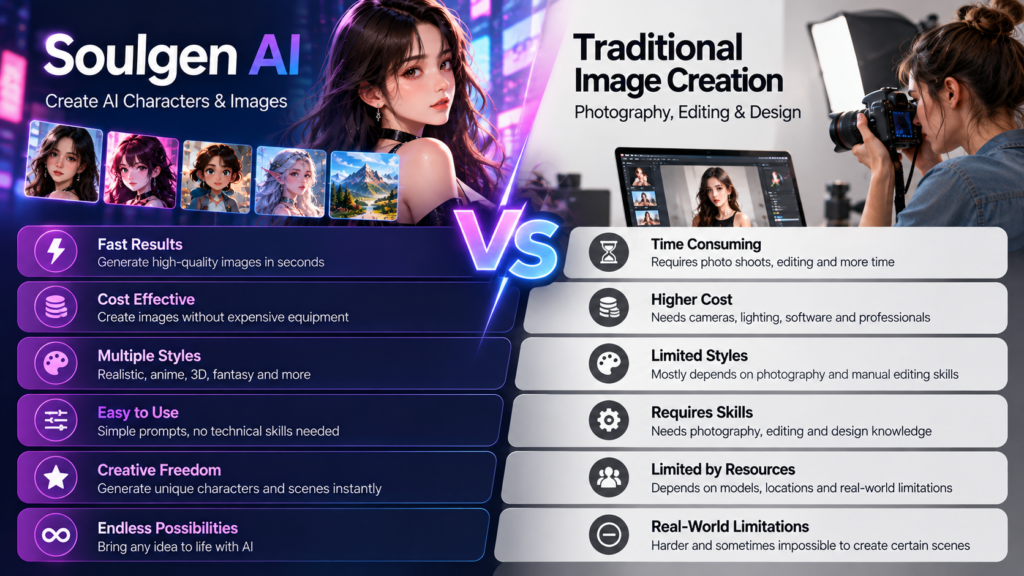
Soulgen vs Traditional Image Creation
Traditional image creation usually requires skills in photography, drawing, illustration, or image-editing software. These methods can provide detailed control, but they may require more time and technical knowledge. Soulgen and similar AI tools approach the process differently by allowing users to describe an idea using natural language. This can reduce the technical barrier for experimentation. However, traditional methods can still offer greater control over exact details, especially for professional projects requiring precise branding or consistent characters. Therefore, AI generation and traditional design are not necessarily direct replacements. They can also work together during different stages of a creative workflow.
For example, a designer might use Soulgen to brainstorm several visual directions before creating the final artwork manually. A writer could generate rough character references and later commission an illustrator to produce polished assets. A marketer might explore compositions before photographing a real product. This combined approach can save creative time while keeping human control over important decisions. Users should also remember that AI-generated content may require additional editing. The final result should be checked for unwanted artifacts, inaccurate details, and possible rights concerns. Choosing the right method depends on the project’s purpose, budget, required control, and publishing requirements.
Is Soulgen Worth Exploring?
Whether Soulgen is useful depends largely on what a person wants to create. Someone interested in AI art, character concepts, or visual experimentation may find text-to-image generation valuable. Beginners can also use the process to learn how prompts influence visual results. On the other hand, users who need exact brand assets, highly controlled compositions, or production-ready commercial artwork may need additional tools and human editing. The best way to evaluate the platform is to test it against a specific creative goal. Instead of judging it only by impressive examples, users should consider consistency, available features, costs, image quality, and usage rights.
It is also important to keep expectations realistic. AI image generators can produce impressive results, but they do not guarantee perfect images from every prompt. A good workflow usually involves creating an initial concept, reviewing the output, refining the prompt, and checking the final image carefully. Users interested in related AI tools can also explore our guides on AI image generators, AI art tools, and how to write effective AI prompts. These resources can help beginners understand the broader AI image ecosystem. Comparing several platforms may also reveal which workflow best matches a particular project and creative requirement.
Soulgen Safety, Privacy and Responsible Use
Responsible use is an important part of working with any AI image generator. Users should avoid uploading private photographs or sensitive information unless they understand how the service handles that material. Privacy policies can explain how uploaded content and generated results are processed, stored, or used. These policies may change, so checking the current version is important. Users should also respect the rights of other people when creating images based on recognizable individuals. Creating misleading images of real people can cause confusion or harm, particularly when an audience believes the content is authentic.
Copyright and licensing are equally important. An AI-generated image may not automatically provide unrestricted commercial rights simply because a user created it through a particular platform. Different services can have different rules concerning ownership, downloads, commercial use, and prohibited content. Users should therefore read the current terms before using generated images in advertisements, products, websites, or other commercial projects. When an image is important to a business, professional publication, or legal matter, additional advice may be appropriate. Responsible use means checking the rules first rather than assuming every generated image can be used anywhere.
Soulgen: Key Points at a Glance
| Area | What to Know |
|---|---|
| Main purpose | AI-assisted image creation |
| Input | Written prompts |
| Typical users | Creators, beginners, writers, designers |
| Common uses | Characters, concepts, scenes, visual ideas |
| Main advantage | Fast creative experimentation |
| Main limitation | Results can vary between generations |
| Important concern | Review privacy and usage terms |
| Best approach | Generate, review, refine, and edit |
This overview shows why Soulgen can be interesting for people exploring AI-generated visuals. Its main value comes from turning written ideas into visual concepts without requiring traditional drawing skills. However, the quality and usefulness of the final image depend on the prompt, generation process, and user’s expectations. The platform should therefore be treated as a creative tool rather than a guaranteed replacement for professional design. Users can get better results by writing clear prompts, reviewing every output, and refining their instructions. Before publishing generated images, they should also check current licensing, privacy, and content requirements for their intended use.
Frequently Asked Questions About Soulgen
What is Soulgen used for?
Soulgen is an AI image generation platform designed for creating visual content from written descriptions. Users can describe characters, scenes, appearances, and other concepts, then generate images based on those instructions. It can be useful for creative experimentation, visual brainstorming, character concepts, and other projects where users need quick visual ideas.
Is Soulgen easy for beginners?
Soulgen can be approachable for beginners because its main workflow uses written prompts instead of complex design tools. However, getting consistent results may require practice. Beginners can start with short, clear descriptions and gradually add details. Reviewing each result helps users understand how different words influence the generated image.
Can Soulgen create realistic images?
AI image generators can create images with realistic-looking details, depending on the prompt and available generation model. However, realism is not guaranteed for every result. Users should inspect faces, hands, objects, backgrounds, and other details carefully. Generated images can still contain visual inconsistencies or artificial-looking elements.
Can Soulgen images be used commercially?
Commercial use depends on the platform’s current terms and the specific type of generated content. Users should review the latest licensing and usage rules before using images for advertisements, products, websites, or paid projects. It is safer to verify the applicable terms directly rather than assuming commercial rights.
How can I get better results from Soulgen?
Start with a clear subject and describe the setting, appearance, composition, lighting, and mood. Avoid conflicting instructions and unnecessary repetition. Generate an initial image, identify the problems, and refine the prompt gradually. This step-by-step approach makes it easier to improve results while learning which descriptions work best.
Conclusion
Soulgen offers a simple way to explore AI-generated images through written prompts. It can help beginners, creators, writers, and designers turn visual ideas into early concepts without traditional drawing skills. At the same time, users should understand that AI generation has limitations. Results can vary, visual mistakes can appear, and licensing or privacy rules may affect how images can be used. The most effective approach is to experiment carefully, refine prompts, inspect every result, and verify current platform terms before publishing. If you are exploring AI creativity, Soulgen can be one tool worth testing alongside other image-generation and design options.






1 comment on “Soulgen: AI Image Generator Guide, Features and Uses”