


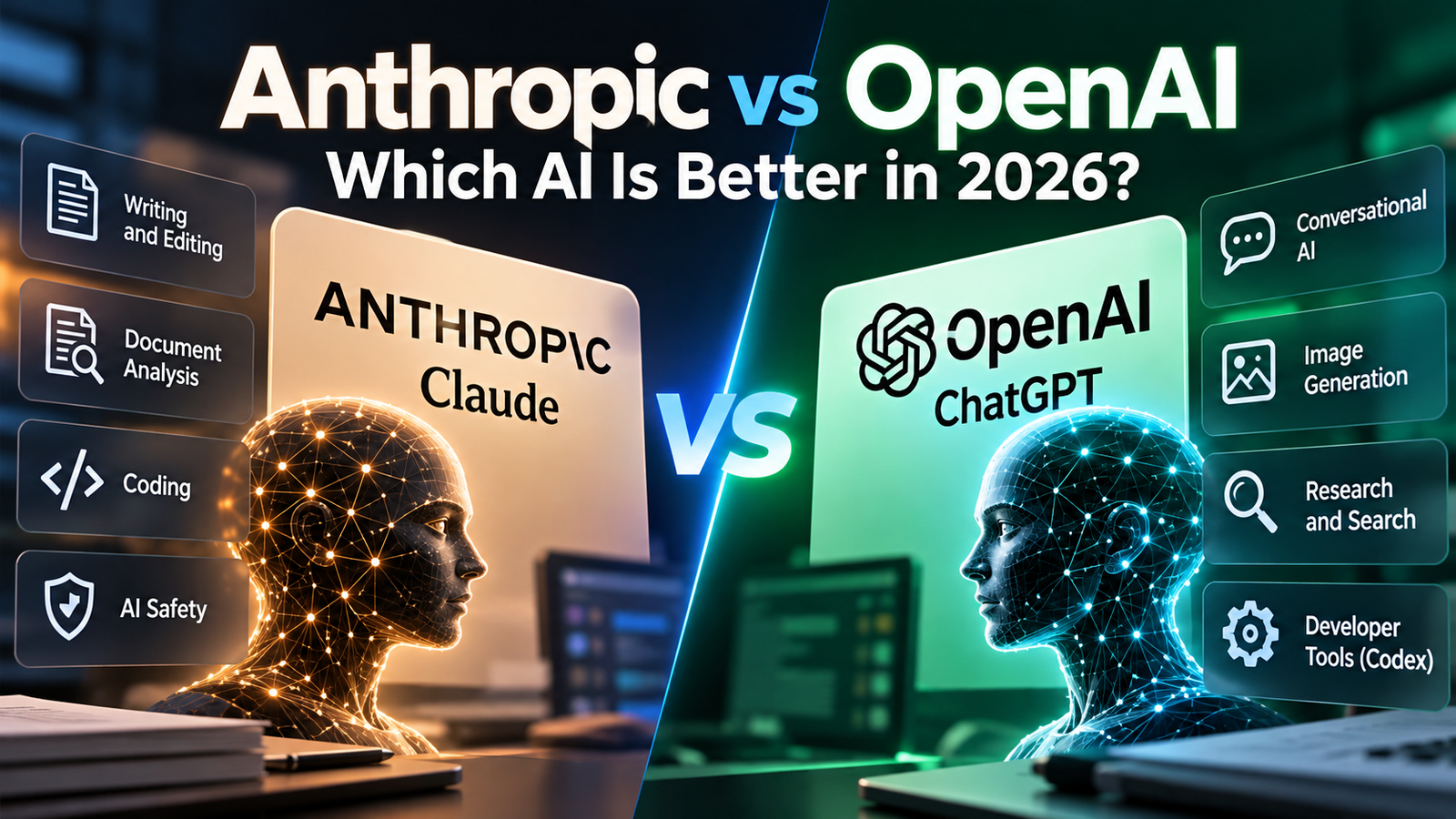
The Anthropic vs OpenAI comparison comes down to more than choosing between Claude and ChatGPT. Both companies develop advanced artificial intelligence models, but their products, tools, development priorities, and approaches to everyday work differ in important ways. OpenAI offers ChatGPT, its GPT model family, and coding tools such as Codex. Anthropic develops Claude, Claude Code, and tools designed for complex document analysis, programming, and business workflows.
The best choice depends on what you want to accomplish. A student may value clear explanations and research assistance, while a software developer may care more about code quality, terminal access, and the ability to work through a large project. Businesses must also consider data handling, API costs, integrations, and administrative controls.
This guide compares Anthropic and OpenAI across their major products, practical applications, strengths, limitations, and costs. It also explains how to evaluate both platforms fairly, so you can choose the right tool for your needs rather than relying on brand reputation or benchmark scores alone.
What Are Anthropic and OpenAI?
Anthropic and OpenAI are AI companies that develop large language models (LLMs). These models learn patterns from training data and generate responses based on user instructions and the context available to them. They can assist with writing, coding, research, summarization, and many other tasks.
However, the two companies offer more than standalone chatbots. Their products include developer APIs, business services, and tools that can interact with software or help complete multistep tasks.
What Is Anthropic?
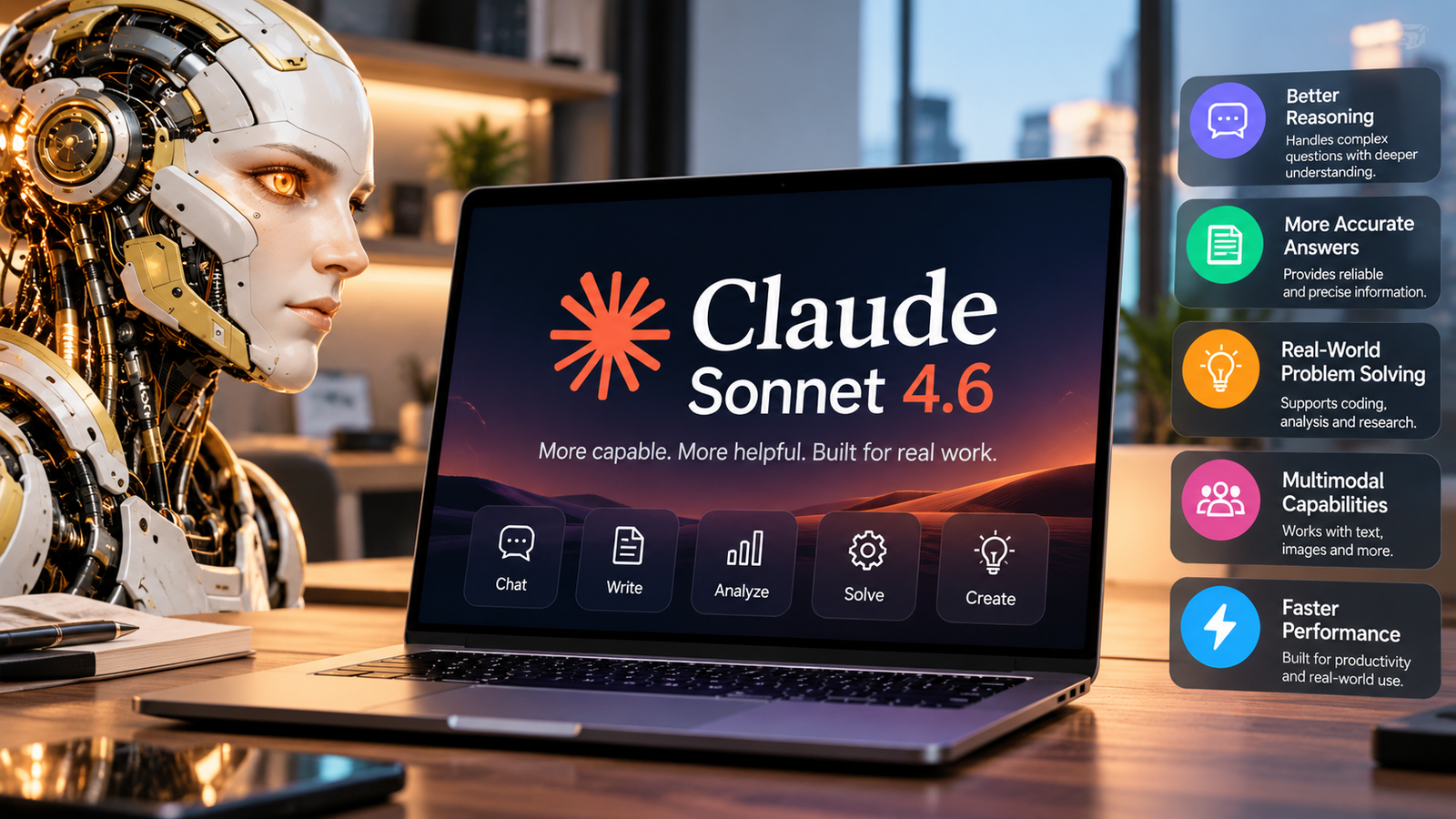
Anthropic is an AI company best known for its Claude family of models. Its products focus on language-based work, software development, document analysis, and business applications.
Claude is available through a conversational interface and developer services. Claude Code provides a coding-focused environment that can help developers understand codebases, edit files, run commands, and work through programming tasks with appropriate permissions.
Anthropic also emphasizes AI safety through research and methods such as Constitutional AI. Its published approach aims to guide model behavior using explicit principles rather than relying exclusively on human feedback.
What Is OpenAI?
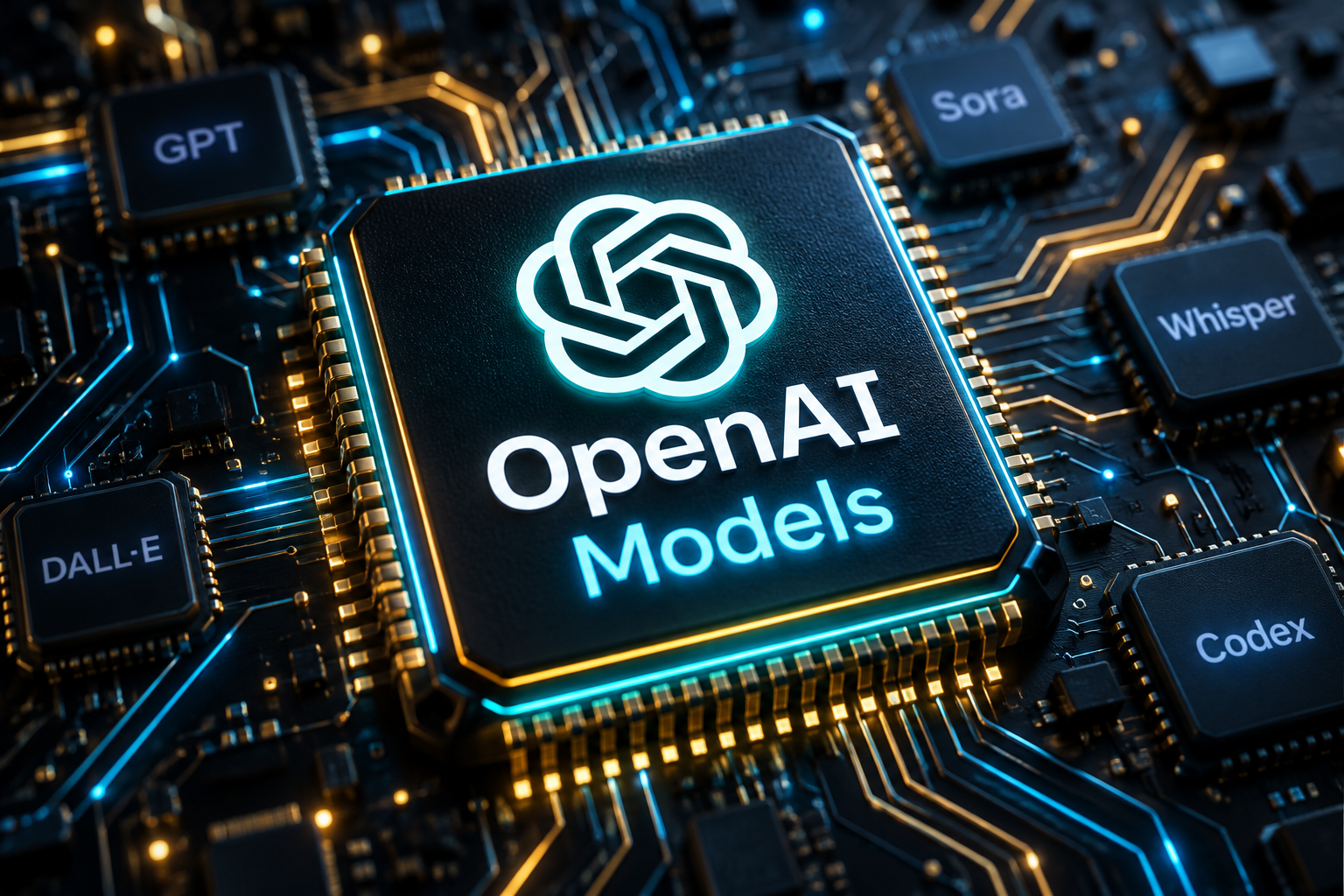
OpenAI develops the GPT family of models and provides access through ChatGPT and its API. ChatGPT supports conversational assistance, writing, research, data analysis, image-related tasks, and other capabilities depending on the selected model, plan, and enabled tools.
OpenAI also offers Codex for software development and automation workflows. Developers can integrate supported models into their own applications using the API.
A major distinction is the breadth of OpenAI’s consumer-facing ecosystem. ChatGPT brings several AI capabilities together in one interface, although the features available to individual users depend on their subscription and regional availability.
Anthropic vs OpenAI: Main Differences at a Glance
The following comparison summarizes the main differences between Claude and ChatGPT. Exact capabilities depend on the model, subscription, and available tools.
| Feature | Anthropic | OpenAI |
|---|---|---|
| Main AI assistant | Claude | ChatGPT |
| Model family | Claude | GPT |
| Coding tools | Claude Code | Codex |
| Writing and editing | Language-focused capabilities | Broad writing and content tools |
| Document analysis | Long-document analysis and structured reasoning | Document analysis, data tools, and research workflows |
| Image generation | Depends on the specific product and integration | Available through supported ChatGPT features |
| Research | Research and tool-enabled workflows where available | Search and research tools where available |
| AI development | Claude API | OpenAI API |
| Safety approach | Constitutional AI and related safety research | Alignment training, safety evaluations, and deployment safeguards |
| Best way to choose | Test Claude on your actual tasks | Test ChatGPT on your actual tasks |
Neither company is automatically better in every category. A model that performs exceptionally well on a programming benchmark may still struggle with a particular codebase, while a model with excellent writing skills may produce inaccurate facts in a research report.
For a meaningful comparison, evaluate the specific products you intend to use rather than judging either company by its overall reputation.
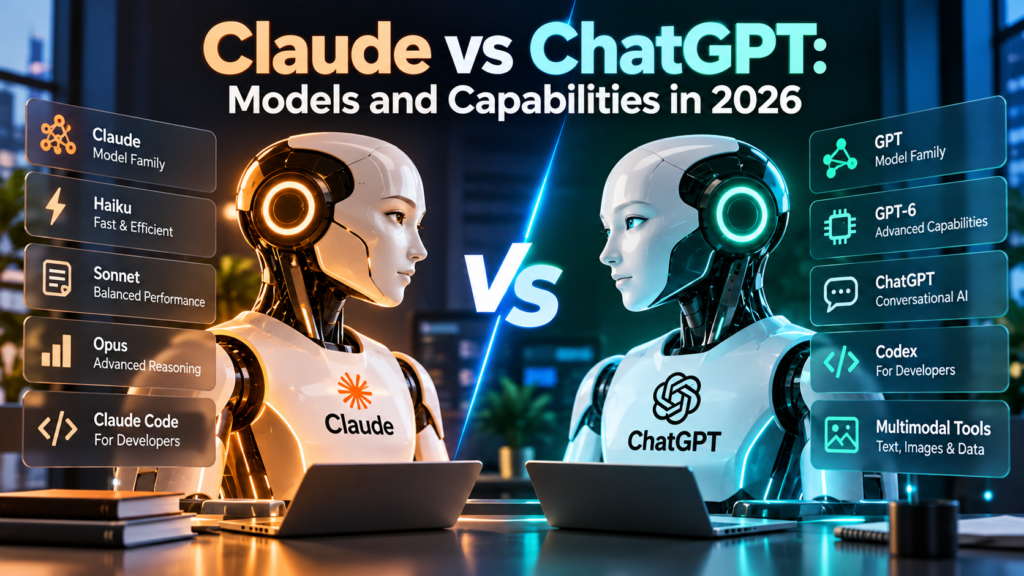
Claude vs ChatGPT: Models and Capabilities in 2026
The model landscape changes quickly, so older comparisons can become misleading. New model releases may change performance, speed, cost, and which features are available to different users.
Anthropic and OpenAI offer model families designed to balance capability, speed, and cost. Exact model names and availability can change, so check the options displayed in your account before making a purchasing decision.
Claude models
Anthropic’s model families have traditionally offered different balances of capability, speed, and cost.
- Haiku: Designed for fast responses and cost-sensitive, high-volume tasks.
- Sonnet: A balance of performance, speed, and cost for everyday professional work.
- Opus: A higher-capability option for demanding reasoning, coding, and knowledge work.
These descriptions explain the general positioning of the model families, not a guarantee that every Opus model will outperform every competing GPT model.
OpenAI GPT models
OpenAI offers models with different performance and cost profiles.
- General-purpose models: Designed for a wide range of everyday and professional tasks.
- Higher-capability models: Intended for more demanding reasoning and complex work.
- Specialized tools: ChatGPT and Codex provide interfaces and workflows around the underlying models.
The important distinction is that a model and an AI product are not the same thing. The model generates or reasons over information, while the product determines which tools, files, integrations, and interface features are available.
Writing, Research, and Content Creation
Both Claude and ChatGPT can help with professional writing, but the best results depend on how you structure the task and verify the output.
When Claude may be a good choice
Claude is worth testing for:
- Editing long articles while preserving a consistent tone.
- Reviewing large documents and extracting key arguments.
- Reorganizing complicated information into a clear structure.
- Drafting reports that require careful handling of context.
- Revising code, documentation, or technical explanations.
For example, a content editor could provide Claude with a long draft and ask it to identify unsupported claims, repeated ideas, unclear paragraphs, and missing explanations. The editor can then review the suggested changes rather than accepting them automatically.
When ChatGPT may be a good choice
ChatGPT is useful for workflows that combine writing with other tools, including:
- Developing article outlines and editorial plans.
- Analyzing spreadsheets and structured information.
- Working with supported image-generation features.
- Researching subjects using available search tools.
- Creating interactive explanations, calculations, or planning tools.
Suppose a website owner is preparing an article about an AI product. They could use ChatGPT to organize research questions, examine a spreadsheet of keywords, create a draft, and develop a visual concept within a connected workflow.
Which produces better content?
There is no universal winner. Claude may produce a draft that better matches your preferred style, while ChatGPT may be more convenient when the work involves research, data analysis, and visual assets together.
For SEO content, neither tool guarantees accurate facts, strong rankings, or compliance with search quality expectations. Both can invent details, misunderstand search intent, or repeat common information.
A practical editorial process should include:
- Verify important claims against reliable sources.
- Remove unsupported statistics and outdated product details.
- Add specific examples that genuinely help readers.
- Edit repetitive paragraphs and generic introductions.
- Check that the article answers the reader’s actual question.
The final quality depends on the research, instructions, editing, and fact-checking—not simply on which chatbot generated the first draft.
Claude vs ChatGPT for Coding and Software Development
Coding is one of the most important areas in the Anthropic vs OpenAI debate. Both companies offer models and tools that can help developers write code, debug errors, understand unfamiliar projects, and automate parts of software development.
The practical difference is often the workflow rather than the model alone.
Claude Code
Claude Code is designed to work with software projects rather than only answer programming questions in a chat window. Depending on the environment and permissions, it can inspect project files, edit code, run commands, and help investigate errors.
It can be useful for:
- Understanding a large or unfamiliar codebase.
- Refactoring existing functions.
- Investigating bugs across several files.
- Writing tests and explaining their purpose.
- Automating repetitive development tasks.
For example, a developer maintaining a WordPress website could ask Claude Code to inspect a custom plugin, identify a possible PHP error, and propose a targeted fix. The developer should still review the changes, test the plugin, and create a backup before deploying them.
OpenAI Codex
Codex provides a coding-focused workflow for tasks such as implementing features, reviewing code, debugging, and working through development assignments.
It is particularly relevant when developers want to delegate well-defined coding tasks to an AI tool and review the resulting changes.
Typical applications include:
- Implementing a new feature from a specification.
- Investigating failing tests.
- Reviewing proposed code changes.
- Writing documentation.
- Working on tasks that can be divided into manageable steps.
Which is better for coding?
There is no reliable universal winner. Claude Code and Codex can perform differently depending on the programming language, project structure, available tools, task complexity, and model selected.
A useful test is to give both tools the same real task. Measure whether the solution works, how many corrections it needs, whether it introduces security problems, and how much human review it requires.
A model that generates code quickly is not necessarily the cheaper option if its output takes substantially longer to debug.
Anthropic vs OpenAI Pricing: Which Is More Affordable?
Pricing should be evaluated at two levels: individual subscriptions and API usage.
Subscription pricing
Claude and ChatGPT have free and paid access options, with higher-tier plans offering different combinations of models, usage limits, and features.
The exact subscription prices, limits, and benefits can change. They may also vary by country, billing method, taxes, and account eligibility. For that reason, check the current plan details before paying rather than relying on an older comparison.
The important questions are:
- Does the free plan provide enough access for your regular tasks?
- How often will you reach usage limits?
- Do you need advanced reasoning, coding tools, or research features?
- Will the paid plan save enough time to justify its cost?
API pricing
For developers, API pricing is usually based on the number of tokens processed. Tokens are small units of text or other model input and output; they are not exactly the same as words.
A simplified cost calculation is:
\[ \text{Total cost} = \text{Input cost}+\text{Output cost} \]
For a more detailed estimate, include cached input, tool calls, and any other billable services that apply.
Consider a hypothetical application that processes customer support messages. If it sends a long conversation history with every request, its input-token costs can become substantial. Reducing unnecessary context or using an appropriate lower-cost model may lower expenses without noticeably harming the results.
When comparing API costs, evaluate:
| Cost factor | Why it matters |
|---|---|
| Input tokens | Long prompts and documents can increase costs |
| Output tokens | Detailed responses require more generated tokens |
| Model choice | Higher-capability models may cost more |
| Caching | Reusing supported prompt content can reduce repeated processing costs |
| Tool usage | Search, computer use, and other tools may add costs |
| Reliability | Incorrect outputs can create extra review and correction work |
The cheapest API is not always the cheapest solution overall. A slightly more expensive model may be more economical if it completes a task correctly with fewer retries.
AI Safety, Privacy, and Data Protection
Privacy is an important consideration when choosing an AI provider, particularly for businesses that handle customer records, internal documents, financial information, or confidential code.
Anthropic and OpenAI both distinguish between consumer services and commercial offerings. Their data policies depend on the product, settings, and applicable terms.
How Anthropic handles data
Anthropic states that inputs and outputs from its commercial products are not used to train its models by default, subject to its stated exceptions and customer agreements. Its consumer products have separate settings and conditions governing the possible use of conversations and coding sessions to improve models.
How OpenAI handles data
OpenAI states that it does not use data from its business products, including ChatGPT Business, ChatGPT Enterprise, and the API, to train its models by default. Consumer ChatGPT services have separate data controls and policies.
These policies are useful starting points, but they do not mean that every interaction is automatically private in every sense.
Organizations should also consider:
- How long prompts, outputs, and files are retained.
- Who can access conversations within a workspace.
- Whether third-party integrations receive submitted information.
- Whether the service meets applicable contractual and regulatory requirements.
- Whether administrators can enforce the necessary settings.
- What happens when a user submits feedback or reports a problem.
Which company is safer?
Safety is not a single measurable feature. A model can resist harmful requests while still making factual mistakes, and a provider can offer strong privacy controls while its model remains vulnerable to prompt injection or misleading inputs.
Anthropic’s Constitutional AI research describes a method for guiding model behavior through explicit principles. OpenAI also uses model alignment, safety evaluations, and deployment safeguards. Neither approach eliminates every risk.
For sensitive work, review the relevant privacy documentation, test the product’s behavior, and avoid entering confidential information unless your organization has approved the service and configuration.
Advantages and Limitations of Anthropic and OpenAI
Each provider has strengths, but both have limitations that matter in everyday use.
Advantages of Anthropic
- Claude offers capable writing, document-analysis, and reasoning workflows.
- Claude Code supports coding tasks that involve real project files and development tools.
- The model lineup provides options for different performance and cost requirements.
- Anthropic publishes research and information about its approach to AI safety.
Limitations: Claude can still produce incorrect information, misunderstand instructions, or make faulty code changes. Access to particular models, tools, and usage limits depends on the product and subscription.
Advantages of OpenAI
- ChatGPT combines conversational assistance with a broad range of supported tools.
- OpenAI provides developer APIs and coding-focused products.
- Its product ecosystem supports writing, analysis, research, and image-related workflows.
- Different models and plans can accommodate different budgets and requirements.
Limitations: Advanced features may have usage restrictions or require a paid plan. Responses can contain errors, and the availability of particular models and tools can change.
What neither provider can guarantee
Neither Claude nor ChatGPT guarantees that every response will be correct, that generated code will be secure, or that AI-generated articles will rank well in search engines.
Both systems can hallucinate: they may generate a plausible answer that contains false information. They can also miss relevant context, misinterpret ambiguous instructions, or make mistakes when using tools.
Human review remains important whenever errors could have significant consequences.
Which AI Should You Choose for Your Work?
The right choice depends on your main workload, budget, and preferred interface.
| Your main requirement | What to try first |
|---|---|
| Long-form writing and editing | Claude and ChatGPT |
| Software development | Claude Code and Codex |
| Research with web sources | ChatGPT and Claude’s available research tools |
| Image generation | ChatGPT’s supported image tools |
| Document review | Both, using the same sample documents |
| Business automation | Compare both providers’ APIs and tool integrations |
| High-volume AI applications | Compare API costs and measured task quality |
| Confidential business workflows | Compare commercial privacy terms and controls |
These are starting points for evaluation, not claims that one provider always wins a category.
A practical seven-day evaluation
If you are deciding which paid service to purchase, test both products using the same representative tasks.
Days 1–2: Writing and reasoning. Give each model a real assignment and compare accuracy, clarity, and editing requirements.
Days 3–4: Coding or document analysis. Use a representative project or document. Check whether the results are correct and how much human intervention is needed.
Day 5: Research. Ask both tools to answer the same question using current sources. Check the evidence rather than judging only the fluency of the answer.
Day 6: Workflow and privacy. Evaluate the integrations, file handling, permissions, and data policies relevant to your work.
Day 7: Calculate the value. Compare subscription or API costs with time saved, error rates, and the amount of correction required.
This approach is more useful than choosing a provider based on a single benchmark or online review.
Frequently Asked Questions
Is Anthropic better than OpenAI?
Neither is consistently better at every task. Compare Claude and ChatGPT using your actual writing, research, coding, or business requirements.
Is Claude better than ChatGPT for coding?
Both offer capable coding tools. Claude Code and OpenAI Codex should be tested on the same programming tasks to determine which works better for your project.
Is Claude free to use?
Anthropic offers a free Claude option, subject to availability and usage limits. Paid plans provide different levels of access and features.
Is ChatGPT better for content writing?
ChatGPT is useful for drafting, research, and supported multimedia workflows. Claude is also a strong option for writing and editing. Fact-checking remains essential with both.
Which is cheaper, Claude or ChatGPT?
The answer depends on the subscription or API model, usage limits, token rates, and features required. Compare current prices and your expected workload before choosing.
Do Anthropic and OpenAI use conversations for AI training?
Both distinguish consumer services from commercial products. Consumer data settings and policies differ from business defaults, so review the specific service’s current terms and controls.
Can I use Claude and ChatGPT together?
Yes. You can use one for drafting or coding and the other for critique, verification, or alternative solutions. Check important facts independently rather than treating either model as the final authority.
Conclusion: Anthropic vs OpenAI
The Anthropic vs OpenAI comparison does not have one permanent winner. Claude offers compelling options for writing, document analysis, and software development, while ChatGPT provides a broad assistant experience that combines conversational AI with supported research, data, coding, and image tools. Both companies continue to develop their models, so their relative strengths can change with new releases.
For individual users, the best decision is to choose the service that handles their most frequent tasks accurately and comfortably within their budget. For developers and businesses, API costs, integration requirements, privacy controls, and reliability deserve equal attention to model quality.
Try both platforms with the same real-world assignments before committing to a paid plan. The most useful AI is the one that consistently improves your work, reduces unnecessary effort, and produces results you can verify.





1 comment on “Anthropic vs OpenAI: Which AI Is Better in 2026?”