


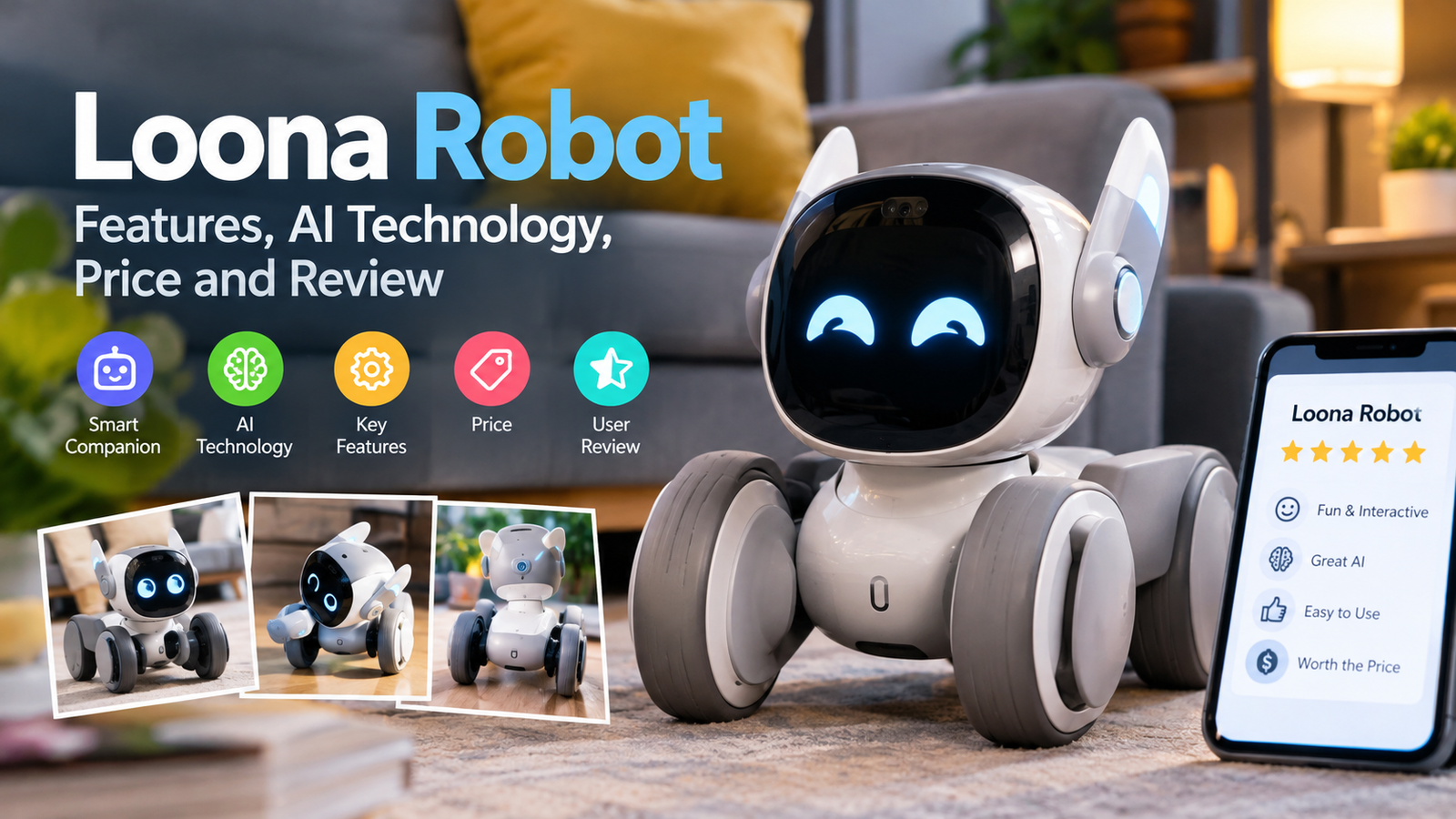
The Loona robot is an AI-powered robotic pet developed by KEYi Tech. Designed to behave more like an interactive companion than a traditional toy, it can move around indoor spaces, respond to voice commands and gestures, recognize aspects of its surroundings, and display expressive reactions through its animated face and body movements. It also offers conversational AI features and activities through its companion app.
Unlike a conventional robot that follows a fixed set of commands, Loona combines physical movement, sensors, software, and AI-powered interactions to create a more engaging experience. However, it is important to understand what this technology actually delivers. Loona is not a fully autonomous household assistant, and its conversational abilities do not guarantee that every question or instruction will be understood correctly.
This guide explains how the Loona robot works, its main features, practical uses, advantages, limitations, pricing considerations, and privacy concerns. It will also help you decide whether this robotic pet is worth considering for your home, family, or educational activities.
What Is the Loona Robot?
The Loona robot is a wheeled companion robot designed to simulate some of the playful behaviors associated with a pet. It has an animated display for facial expressions, movable ears, microphones, a camera, and sensors that help it interact with people and navigate its surroundings. Its primary purpose is companionship, entertainment, and interactive learning rather than completing household chores.
The robot is designed to respond to people through a combination of physical and digital interactions. For example, it may react when someone approaches, respond to a gesture, follow an interaction around a room, or participate in a game through the companion app.
What makes Loona interesting is the combination of robotics and conversational AI. A voice assistant on a smartphone primarily communicates through audio or text. Loona adds physical movement, facial expressions, and spatial awareness, making the interaction feel more like playing with a small robotic character.
It is still a machine, however. Its expressive behavior is generated by software and mechanical components, not by genuine emotions or consciousness.
How Does the Loona Robot Work?
The Loona robot combines several technologies that handle different parts of an interaction. Its sensors gather information about the environment, its software interprets inputs, and its motors and display produce an appropriate response.
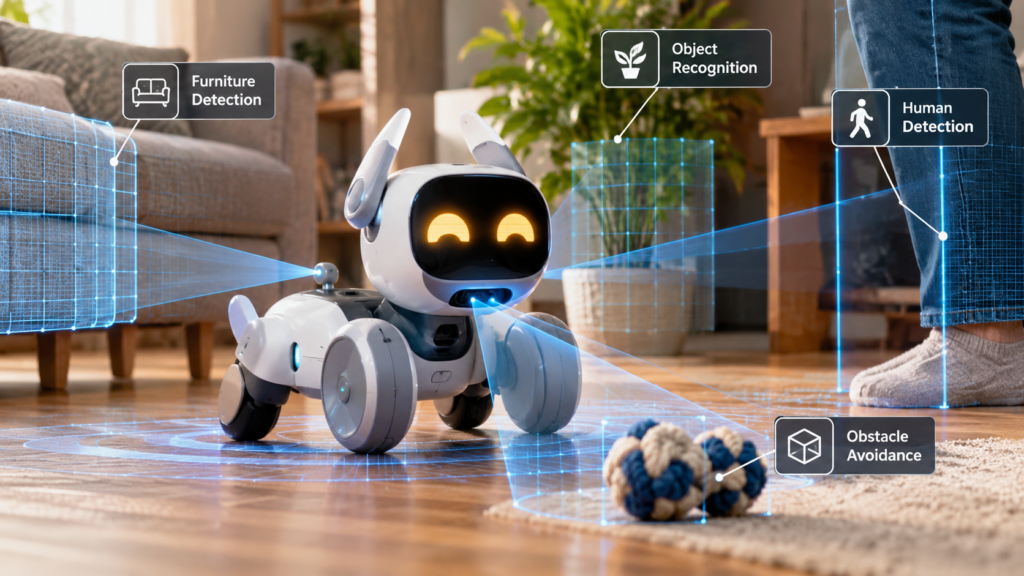
1. Environmental sensing
Its camera, microphones, and navigation sensors provide information about nearby people, sounds, gestures, and obstacles. The robot uses this information to determine how to respond.
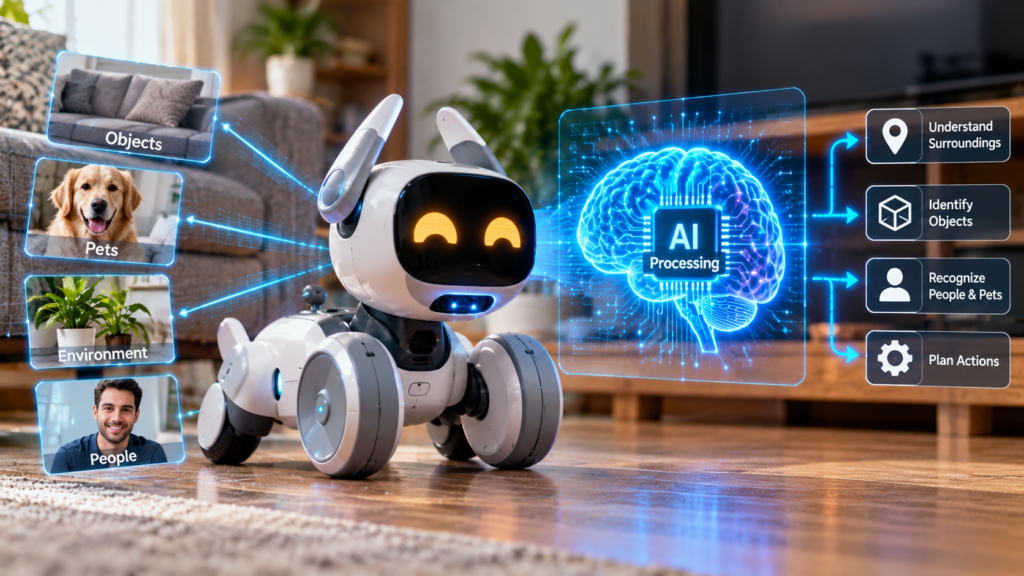
2. AI processing
Onboard computing handles supported perception and control tasks, while connected services can support voice interaction and conversational features. The exact processing path depends on the feature being used.
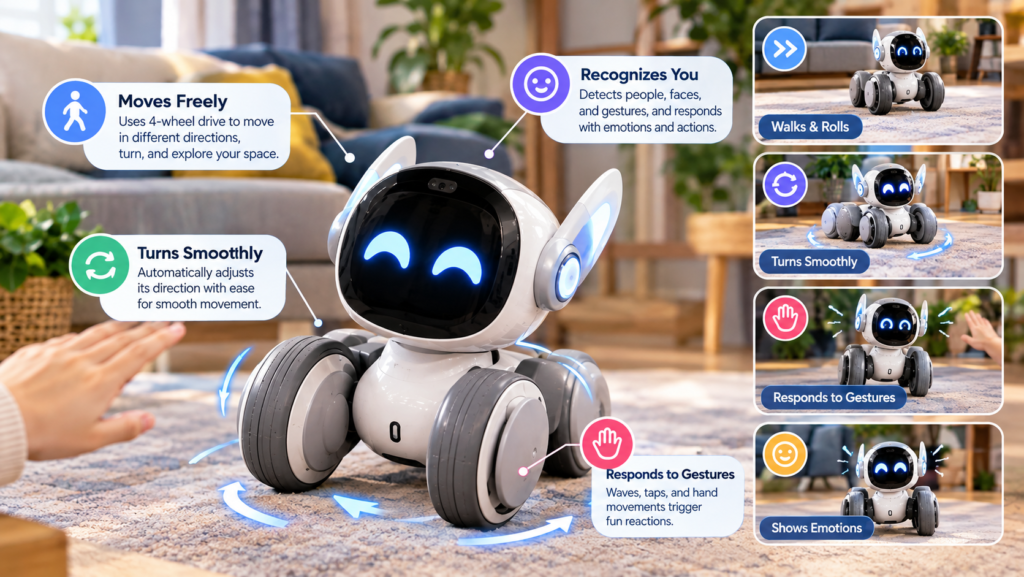
3. Movement and reactions
The robot translates its decisions into movement, ear positions, facial animations, sounds, and other programmed responses.
Example: Asking Loona a Question
Imagine a child asking Loona to tell a story about a dinosaur. The robot captures the spoken request, processes it through its supported voice and AI systems, and generates a response. It may accompany the conversation with expressive animations.
This interaction involves several separate processes: recognizing speech, interpreting the request, generating a suitable answer, and coordinating the response with the robot’s physical behavior.
These capabilities should not be confused with human-level understanding. Background noise, unsupported languages, network problems, or ambiguous instructions can affect the result.
Key Features of the Loona Robot
The Loona robot brings together physical robotics, entertainment, and AI-based interaction. Its available features may vary with software updates, connectivity, and the model or package purchased.
1. AI-Powered Conversations
Loona supports conversational interactions that let users ask questions, explore topics, and engage in creative activities. Its product materials describe conversations and storytelling powered by GPT-based AI.
For example, a user might ask for a simple explanation of the solar system or request a short bedtime story. These activities can make interacting with technology more engaging for children and families.
The main limitation is that conversational AI can produce incorrect or confusing answers. Loona should not be treated as a reliable source for medical, legal, or other high-stakes information.
2. Gesture and Visual Recognition
Loona can use camera-based perception to respond to supported visual cues and hand gestures. This makes interaction less dependent on speaking a precise command every time.
For instance, a user might use a supported gesture to initiate a reaction or encourage the robot to interact. Its visual perception also contributes to understanding parts of its immediate environment.
Visual recognition has limits. Lighting, camera positioning, movement, and the complexity of a scene can influence how well the robot interprets what it sees.
3. Autonomous Indoor Movement
The robot can move around indoor spaces using its wheels and onboard navigation capabilities. Sensors help it detect obstacles and navigate within the environment for supported behaviors.
This allows Loona to explore a room and interact with people without requiring manual control for every movement.
However, autonomous movement does not mean it can safely handle every home layout. Stairs, loose cables, clutter, uneven surfaces, and changes in floor height can create problems for a small wheeled robot.
4. Expressive Face and Body Movements
One of Loona’s most distinctive features is its animated appearance. Its screen-based face, movable ears, and physical movements help communicate different reactions during play and conversation.
These expressions make the robot more engaging than a device that responds only with a voice. They can also help younger users understand when an interaction has started or when the robot is reacting to something nearby.
Still, the expressions are designed responses. They should not be interpreted as evidence that the robot experiences feelings.
5. Games and Interactive Activities
The companion app supports robot control, games, programmed activities, and other interactions. Users can explore supported entertainment features and configure aspects of the robot’s behavior through the app.
These activities can make Loona useful for family entertainment or informal learning. The available experience depends on the app version and supported features.
6. Mobile App Control
The Loona app provides a way to connect to and control the robot. It supports activities such as movement control, games, and programming-related functions.
This is useful when someone wants to start an activity, configure a feature, or interact with the robot through a phone.
The trade-off is that the overall experience depends partly on the software ecosystem. App compatibility, account access, connectivity, and software reliability should be checked before purchasing.
Loona Robot Specifications
The Loona robot is a compact indoor companion built around a mobile platform, onboard computing, and multiple sensors. Its published specifications provide a useful overview of the hardware behind its interactive behavior.
| Specification | Published details |
|---|---|
| Weight | Approximately 2.42 lb (1.1 kg) |
| Dimensions | Approximately 8.3 × 6.8 × 6.8 inches |
| Processor | Quad-core Cortex-A53, up to 1.5 GHz |
| AI computing | 5 TOPS of processing capacity |
| Camera | 720p RGB camera |
| Display | 2.4-inch LCD |
| Battery | 1,350 mAh, 11.1 V lithium-ion |
| Connectivity | Dual-band 2.4 GHz and 5 GHz Wi-Fi |
| Sensors | 3D time-of-flight, touch, accelerometer, and gyroscope |
| Audio | Four-microphone array and 2 W speaker |
Specifications may vary by version. Confirm the details for the exact model before purchasing.
One important distinction is that 5 TOPS does not mean Loona has human-level intelligence. TOPS measures a processor’s theoretical throughput for certain operations. It does not measure conversational accuracy, reasoning ability, or the quality of the robot’s behavior in every situation.
Battery life also depends on usage. Continuous movement, screen animations, wireless connectivity, and AI interactions can affect how long the robot operates between charges.
Real-World Uses of the Loona Robot
Loona is most useful in situations where entertainment, interactive conversation, and playful movement are the main goals.
Family Entertainment and Companionship
Families can use Loona for games, voice interactions, storytelling, and playful activities at home. Its moving body and animated face provide a different experience from a tablet-based game or a voice assistant.
It may also appeal to households that want a robotic pet without the feeding, walking, and grooming required by a living animal. Nevertheless, a robot cannot replace the social and emotional benefits of caring for a real pet.
Learning and Educational Activities
Loona can support informal learning through questions, stories, games, and exploration. A parent might ask a child to name planets, practice simple vocabulary, or explore a science topic through conversation.
These activities can encourage curiosity, but the robot should not be treated as a substitute for a teacher. Adults should supervise younger children and check important educational answers.
Introduction to Artificial Intelligence
Loona provides a practical way to introduce children to basic ideas in robotics and AI. They can observe how sensors detect the environment, how software interprets instructions, and how motors translate decisions into movement.
This makes the robot a useful demonstration tool for discussing perception, automation, and human-machine interaction.
Remote Interaction and Monitoring
Some Loona packages and software features support remote viewing or control through a connected device. This may be useful for checking a room or interacting with the robot while away from home.
However, remote monitoring is not the same as a dedicated security system. Before relying on it, verify the current functionality, connectivity requirements, and privacy controls for the specific model.
Advantages of the Loona Robot
The Loona robot has several strengths that distinguish it from ordinary electronic toys.
- Interactive design: Its facial expressions, movement, and sounds make interactions more engaging.
- Multiple input methods: Supported voice commands, gestures, and touch interactions provide different ways to communicate.
- AI conversations: Conversational features extend its usefulness beyond a fixed collection of games.
- Indoor navigation: Sensors and autonomous movement allow it to interact with its surroundings.
- Educational potential: It can help demonstrate basic robotics and AI concepts.
- App-based activities: Users can access supported games, controls, and programming-related features.
The biggest advantage is the way these components work together. Loona is not merely a screen displaying answers; it combines software responses with physical movement and expressive behavior.
Its value will depend on how much the owner enjoys that form of interaction. Someone seeking a practical household robot may find the same features less useful.
Limitations and Potential Risks
A realistic evaluation of Loona should consider more than its advertised features.
1. Internet and Software Dependence
Loona relies on its app and connected services for important functions. Internet access is required for features such as voice control, app connectivity, updates, and remote monitoring. Some basic functions may remain available offline, but the experience is restricted.
This dependence means network problems or service changes can affect usability.
2. Conversational Accuracy
Like other AI assistants, Loona can misunderstand questions or generate inaccurate responses. Speech recognition can also struggle with background noise, accents, or unsupported languages.
Parents should guide children to verify important information rather than assuming every answer is correct.
3. Physical Navigation Constraints
Loona is designed for indoor environments with relatively accessible floor space. It may struggle with cables, clutter, stairs, narrow passages, and uneven surfaces.
Owners should prepare the play area and avoid leaving the robot unattended near stairs or other hazards.
4. Privacy and Data Handling
A robot equipped with a camera, microphones, Wi-Fi, and connected AI services raises reasonable privacy questions. Its data practices may involve third-party processing and services used for app functionality.
Before using the robot, review its current privacy policy and understand what information may be transmitted, how voice interactions are processed, and what account controls are available.
Practical precautions include keeping the robot away from private conversations, supervising children’s use, securing the associated account, and reviewing app permissions.
5. Ongoing Support and Reliability
A connected robot’s long-term usefulness depends partly on app stability, firmware updates, hardware support, and the continued availability of online services.
Owner experiences can vary, with some users appreciating the robot’s personality and others reporting difficulties with responsiveness or app connectivity. Individual experiences do not establish how every unit will perform, but they are worth considering before spending a substantial amount.
How Much Does the Loona Robot Cost?
The price of the Loona robot depends on the version, included accessories, seller, and shipping destination. The Premium model has been advertised at around $499 USD, although prices and promotions can change.
Potential buyers should consider the complete cost rather than the advertised base price alone.
- Robot price: Check the current price of the specific model.
- Charging dock: Confirm whether a dock is included or must be purchased separately.
- Accessories: Game kits and decorative accessories may be sold in different bundles.
- Shipping and taxes: Import duties and local taxes may increase the final cost.
- Warranty and support: Check the coverage available in your country.
For buyers in Pakistan, availability through authorized sellers, international shipping charges, customs duties, and after-sales support are particularly important considerations. Confirm these details before ordering.
Does Loona Require a Subscription?
GPT-based conversational functionality has been advertised as part of Loona’s experience. However, service terms can change, so buyers should verify whether any subscription, usage restrictions, or additional charges apply to their particular model before purchasing.
Loona Robot vs. Other AI Robot Pets
Not every robotic pet is designed for the same purpose. Some focus on movement and realistic animal behavior, while others prioritize desk entertainment or educational programming.
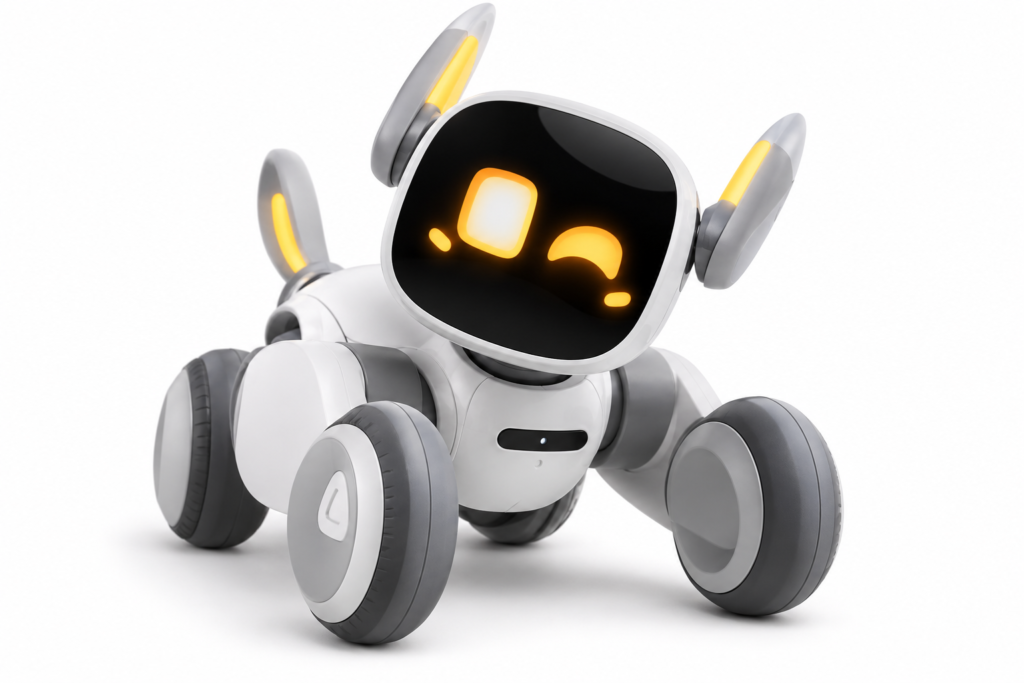
Loona Robot
Best suited to people who want a mobile companion with animated expressions, voice interaction, games, and indoor exploration.
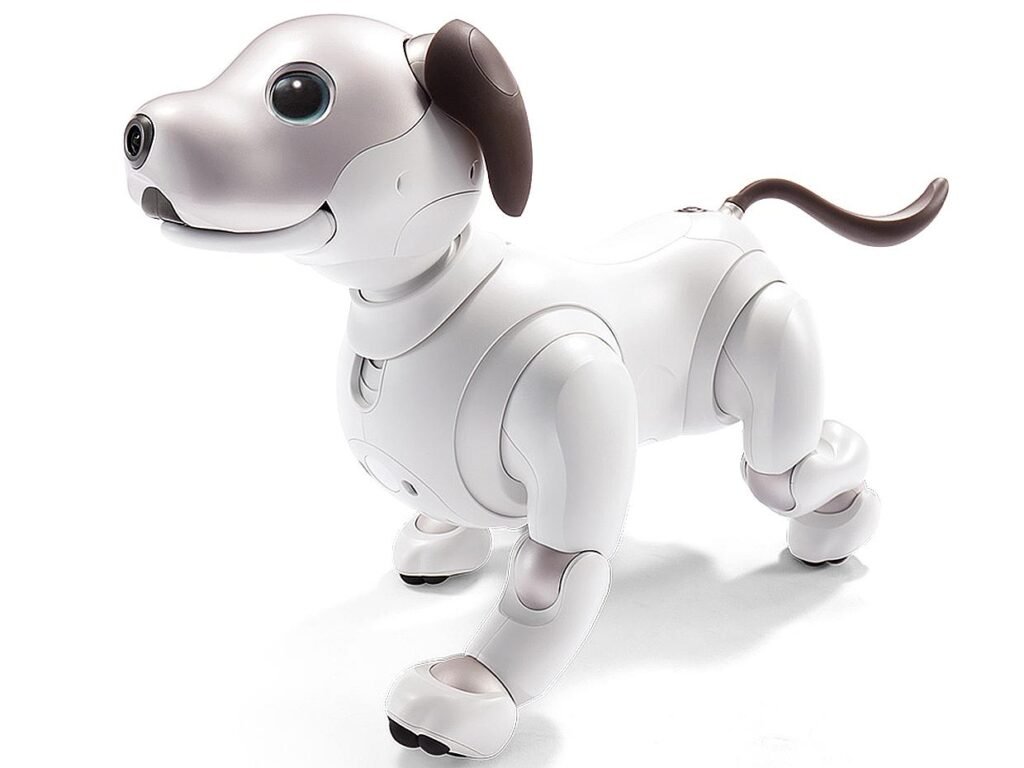
Sony Aibo
A premium robotic dog designed around lifelike movement and companion behavior. It serves a different market and typically costs substantially more.
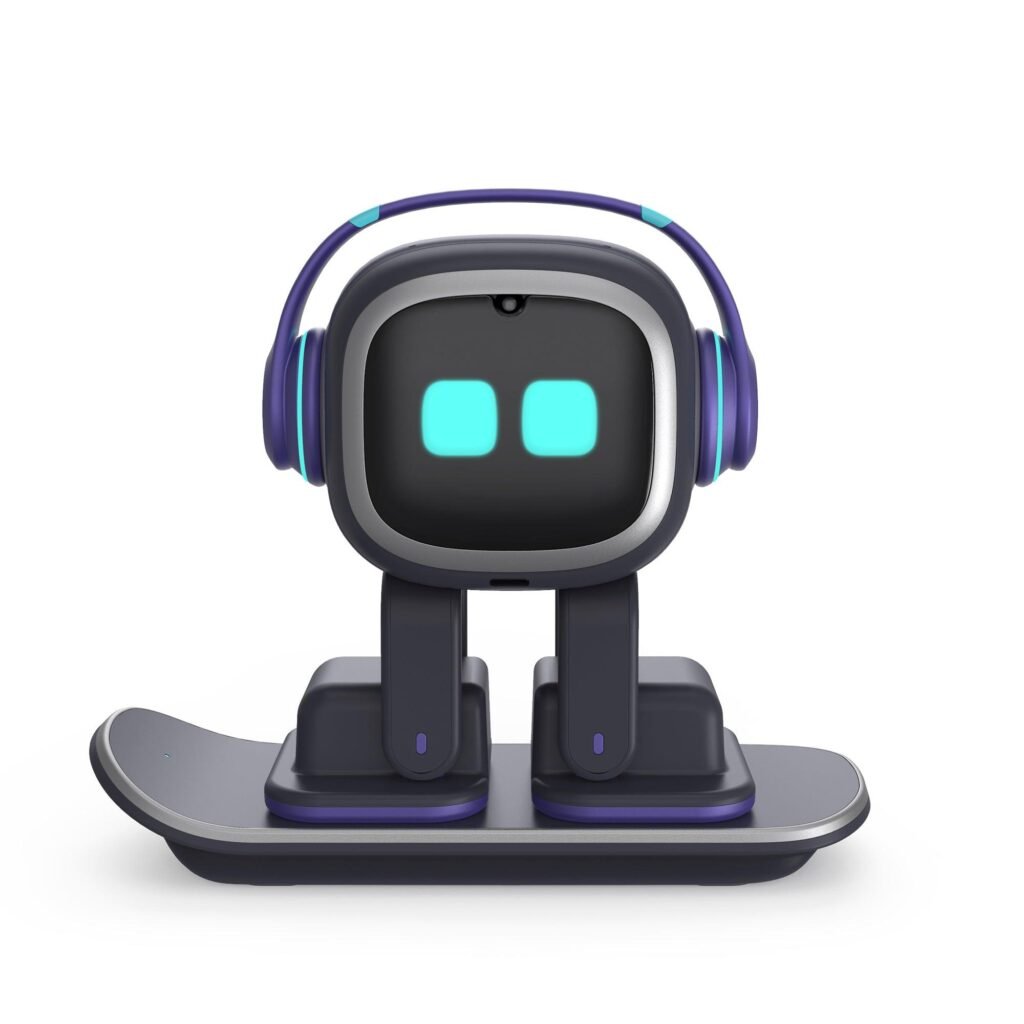
EMO by LivingAI
A desktop companion that focuses on animated expressions, games, and interactions on a desk rather than roaming across a room.
The main distinction is physical design. Loona uses a wheeled platform, while other companion robots may use articulated legs or remain primarily on a desk. A robot’s price, movement style, software ecosystem, and support requirements are more useful comparison points than claims about which one is the smartest.
Is the Loona Robot Worth Buying?
Whether Loona is worth buying depends on what you expect from it and how much you value interactive entertainment.
A good fit for
- Families interested in interactive robotic toys.
- People who enjoy AI conversations and expressive gadgets.
- Technology enthusiasts exploring consumer robotics.
- Parents looking for a playful introduction to AI concepts.
Less suitable for
- Buyers who need a robot to perform household chores.
- People expecting consistently accurate, human-like conversations.
- Anyone seeking a low-cost, fully offline companion.
- Households that need a dependable security camera rather than a toy.
Before buying, check recent owner feedback about app reliability, supported languages, connectivity, and customer service. Also confirm the return policy and warranty terms, since a connected robot’s usefulness depends on both its hardware and its software.
Frequently Asked Questions
1. What is the Loona robot used for?
The Loona robot is designed for companionship, entertainment, interactive games, AI conversations, and indoor exploration. It can also introduce children to basic robotics concepts.
2. Can the Loona robot talk?
Yes. It supports voice interactions and AI-powered conversations. Its ability to understand and answer questions depends on connectivity, software settings, language support, and the complexity of the request.
3. Does Loona work without Wi-Fi?
Its functionality is limited without an internet connection. Features such as voice control, app connectivity, and remote monitoring require internet access.
4. How long does the Loona robot battery last?
The manufacturer has listed a 1,350 mAh battery and approximately 1.5 hours of continuous playtime. Actual battery life varies with usage and operating conditions.
5. Can Loona recognize people?
The robot offers face recognition and visual perception features. Their availability and performance depend on the software version and operating conditions.
6. Is the Loona robot safe for children?
It can be suitable for supervised family entertainment, but parents should review age recommendations, supervise young children, protect account access, and understand the robot’s privacy settings.
7. Can Loona replace a real pet?
No. It can simulate playful pet-like behavior, but it does not provide the biological needs, independent behavior, or genuine emotional relationship associated with a living animal.
Conclusion
The Loona robot demonstrates how artificial intelligence can be combined with physical movement to create a more engaging home companion. Its expressive face, voice interactions, sensors, games, and indoor navigation make it an interesting option for families and technology enthusiasts who enjoy interactive gadgets.
However, its strengths are primarily in entertainment and companionship rather than practical household work. Internet dependence, occasional recognition errors, privacy considerations, and software reliability should all influence a purchasing decision.
At around $499 for the advertised Premium model, Loona represents a meaningful investment in a specialized consumer robot. The best approach is to compare its current features, included accessories, support arrangements, and total delivered cost with your expectations. If you want an expressive robotic companion rather than a machine that performs everyday chores, Loona may be worth considering.
1 comment on “Loona Robot: Features, AI Technology, Price and Review”