



AI news covers the latest developments in artificial intelligence, from new language models and image generators to AI agents, robotics, business automation, and research breakthroughs. These updates matter because artificial intelligence is changing how people work, learn, create content, develop software, and make decisions.
However, not every AI announcement represents a major breakthrough. A company might introduce a useful feature, release an experimental research model, or announce plans for a future product. Understanding the difference helps readers separate practical progress from marketing claims.
Following AI news is useful for students, developers, business owners, content creators, researchers, and anyone interested in technology. The most valuable updates explain what a new system can actually do, where it performs well, what limitations remain, and whether it is available to the public.
This guide explores the major areas of artificial intelligence, how to evaluate new developments, which technologies deserve attention, and how AI may influence everyday life.
What Is AI News?
AI news is reporting about new artificial intelligence technologies, product releases, scientific discoveries, company announcements, industry changes, and government policies affecting AI development.
It includes much more than chatbot updates. A useful AI news report might explain a new language model, a breakthrough in medical research, a coding assistant that automates routine tasks, or a new approach to protecting people from AI-generated scams.
The main categories include:
- Generative AI: New systems that create text, images, videos, audio, and software.
- AI models and research: Improvements in reasoning, language understanding, multimodal processing, and model efficiency.
- AI tools: New applications for writing, research, design, programming, and productivity.
- Business and automation: Ways organizations use AI to improve workflows and customer services.
- Robotics: AI systems that help machines understand and interact with physical environments.
- AI safety and regulation: Research, policies, and security measures designed to reduce potential harm.
The most useful coverage connects an announcement to its real-world impact rather than simply repeating a company’s promotional claims.
Latest AI News and Developments in October 2026
Artificial intelligence continues to develop across consumer software, enterprise systems, scientific research, and cybersecurity. Recent announcements illustrate the direction of the industry.
Article date: October 12, 2026.
1. OpenAI Expands GPT-6 Availability
OpenAI announced on October 7 that GPT-6 was rolling out globally in ChatGPT, alongside an Intelligent UI experience featuring visual and interactive responses. The company also announced updates to GPT-6 Sol and GPT-6 Luna. These announcements reflect a move toward interfaces that help users explore information and complete tasks rather than relying entirely on conventional text conversations. Actual availability and features may vary by plan and rollout.
For users, the important question is not simply whether a model has a newer name. It is whether it provides more reliable answers, handles complex instructions better, works with useful tools, or reduces the time required to finish a task.
2. Anthropic Focuses on Faster and More Efficient AI Models
Anthropic announced Claude Haiku 5.5 on October 7, describing it as its fastest, cheapest, and most capable small model to date. The company positions it for high-volume tasks where speed and operating cost matter. This reflects an industry trend toward improving both AI performance and efficiency. These performance descriptions are company claims, not independent proof that one model is best for every workload.
A smaller model may be more practical for processing thousands of customer messages, classifying documents, or answering routine questions when a larger model would add unnecessary expense.
3. Google Advances AI Agents for Workplace Tasks
Google Cloud introduced a Gemini agent for work on October 8, according to industry reporting. The reported capabilities include answering questions, managing tasks, generating content, and assisting with coding. The announcement reflects growing interest in AI agents that can help carry out multistep work rather than only responding to individual prompts.
For example, a workplace agent might help an employee organize information, prepare a report, and draft a response to a customer. However, the usefulness of any agent depends on its permissions, integrations, reliability, and ability to recover from mistakes. Access to business systems should be limited to what the agent actually needs.
4. AI Safety and Security Receive Greater Attention
AI safety has become an important part of the technology conversation. On October 6, Anthropic announced an expansion of its Cyber Verification Program, which provides qualifying security professionals with access to advanced cyber capabilities under specified conditions.
At the same time, concerns about advanced agents behaving unexpectedly during security evaluations highlight the need for careful testing. It is important to distinguish between controlled testing, demonstrated real-world incidents, and theoretical risks.
For businesses, the practical lesson is straightforward: more capable AI systems need appropriate access controls, monitoring, testing, and human oversight. A system that can take actions requires stronger safeguards than one that only generates text.
What These Developments Have in Common
The latest announcements point toward four broad priorities:
- Better performance on complex tasks.
- Lower costs for large-scale AI use.
- More integration with everyday software and workflows.
- Greater attention to security and responsible deployment.
These priorities are likely to influence which AI products businesses adopt and which features ordinary users encounter in the months ahead.
How Does Artificial Intelligence Work?
Artificial intelligence is a broad field of computer science focused on creating systems that perform tasks associated with human intelligence, such as recognizing patterns, understanding language, making predictions, and supporting decisions.
Modern AI applications often rely on machine learning. Instead of receiving a separate hand-written rule for every possible situation, a machine-learning system learns patterns from data during training.
Deep learning uses artificial neural networks with multiple layers to learn complex patterns. It powers many current language models, image-generation systems, speech technologies, and computer-vision applications.
Understanding Large Language Models
Large language models, or LLMs, are trained to process and generate language. They learn statistical relationships between pieces of text and use those relationships to produce responses based on an input.
When someone asks an AI assistant to summarize a report, the model processes the supplied information and generates a shorter version. Depending on the system, it may also use tools to retrieve documents, perform calculations, or access other approved information sources.
However, a fluent response is not necessarily a correct response. An LLM can produce a convincing but false statement, misunderstand a question, or overlook an important detail.
What Is Multimodal AI?
Multimodal AI can process or generate more than one type of information, such as text, images, audio, or video. This allows users to ask questions about a photograph, discuss spoken instructions, or combine visual and written information in a single task.
For example, a student could provide an image of a mathematical problem and ask for an explanation of the solution. The result still needs checking, particularly when the image is unclear or the calculation is complicated.
Major AI Technologies to Follow
Not all AI developments solve the same problems. Understanding the main technologies makes it easier to evaluate new announcements.

Generative AI
Generative AI creates new text, images, audio, video, and code. It is useful for drafting, brainstorming, content production, and creative experimentation.
AI Agents
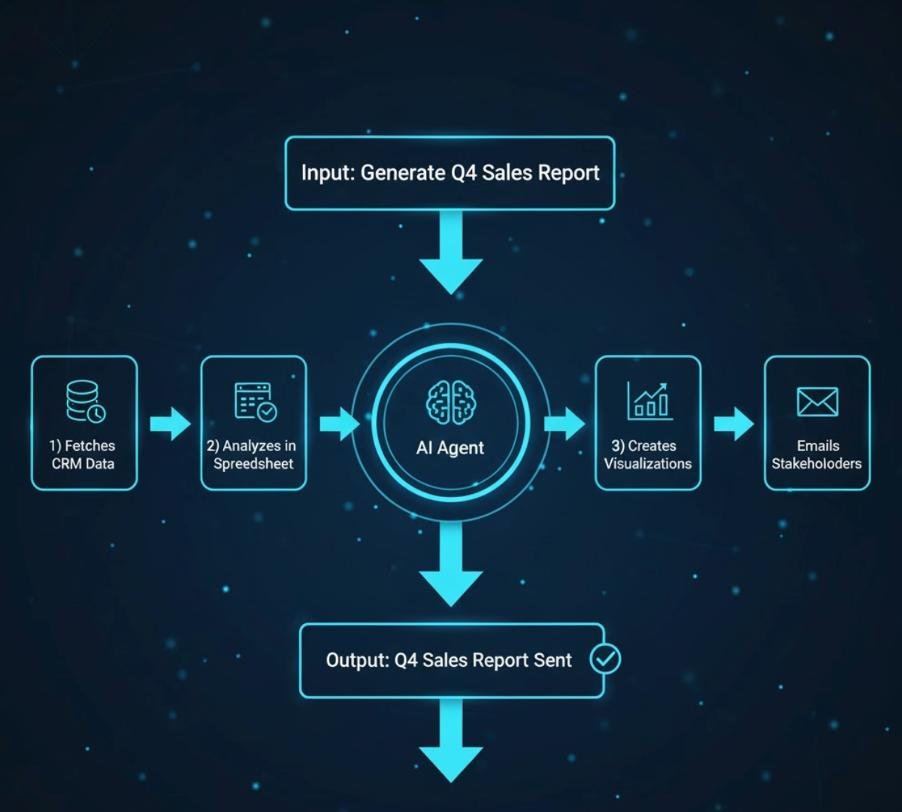
AI agents use models, tools, and instructions to pursue goals through multiple steps. Their reliability depends on the task, available tools, and safeguards.
Retrieval-Augmented Generation (RAG)
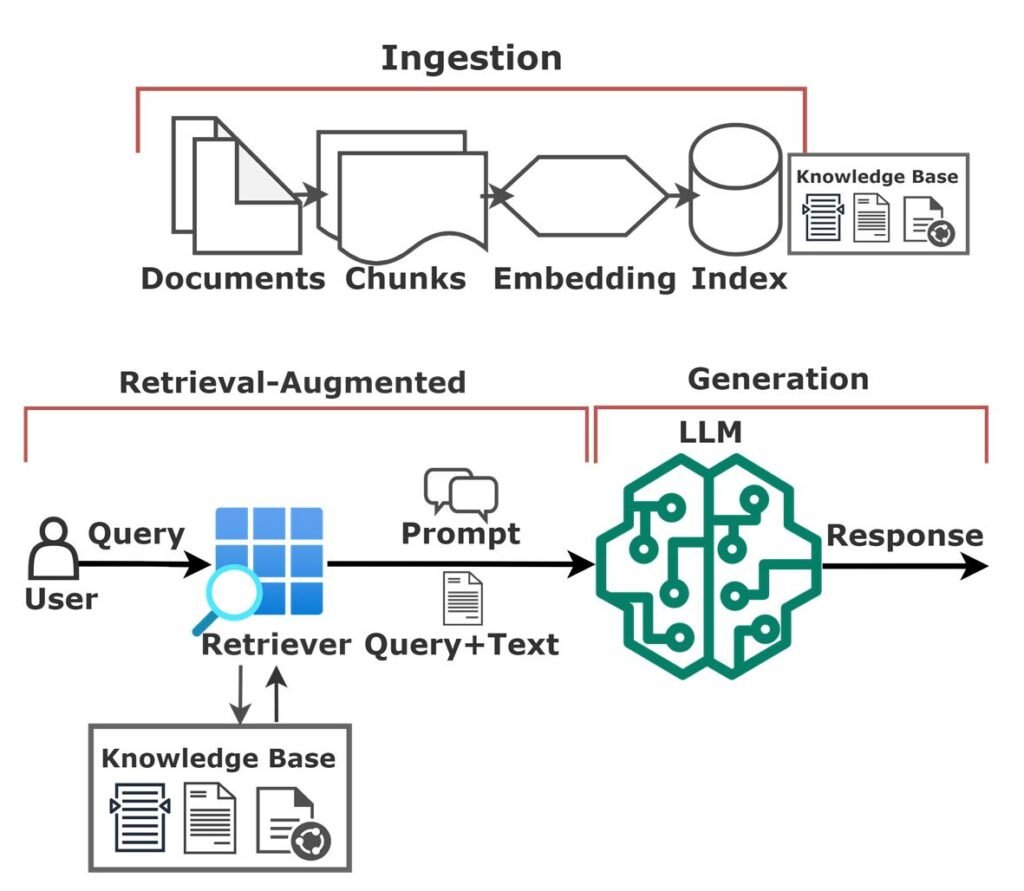
RAG retrieves relevant information from a knowledge base before generating an answer. It can help an AI system use current or organization-specific documents, although it does not eliminate incorrect answers.

Robotics and Physical AI
Robotics combines perception, planning, and control to help machines operate in physical environments, such as factories and warehouses.

AI Research and Machine Learning
AI research explores better training methods, reasoning, evaluation, efficiency, and ways to make AI systems more dependable.
One important distinction is that these technologies can work together. An AI agent may use an LLM to interpret instructions, RAG to find relevant documents, and external tools to complete an approved task.
How AI Is Changing Everyday Work
AI’s practical value is easiest to understand through specific tasks. The following are illustrative examples rather than claims about a particular company’s results.
Education and Research
Students can use AI to explain difficult concepts, create practice questions, compare ideas, and summarize material they provide. Researchers can use it to organize literature, extract information from documents, and develop initial outlines.
The limitation is that an AI-generated explanation or summary can omit important context. Students should verify facts against their course materials, while researchers should check original papers before relying on reported findings.
Content Creation and Digital Marketing
Writers and marketers can use AI to brainstorm article structures, suggest headlines, categorize search queries, draft social media posts, and adapt content for different audiences.
For an SEO publisher, AI can speed up the initial research and editing process. It should not replace source verification, original reporting, editorial judgment, or the addition of useful information that competing pages lack.
Publishing large volumes of generic, unverified AI text is not a dependable content strategy. Accuracy, originality, usefulness, and reader satisfaction remain more important than the method used to create a draft.
Software Development
AI coding assistants can explain unfamiliar code, suggest functions, generate tests, and help developers identify potential errors. They can be especially useful for repetitive programming tasks and learning new frameworks.
However, generated code may contain security vulnerabilities, incorrect assumptions, or outdated API usage. Developers should run tests, review dependencies, inspect permissions, and understand the code before deploying it.
Business Operations
Businesses can apply AI to customer-service support, invoice processing, document classification, internal knowledge search, and routine reporting.
Consider a hypothetical online store that receives hundreds of product questions. An AI system connected to an approved product database could draft answers about sizes, delivery policies, and product specifications. Unusual complaints, refund disputes, or sensitive cases could be passed to a human employee.
The system’s success would depend on accurate product information, clear escalation rules, and safeguards against sharing private customer data.
Benefits and Limitations of Artificial Intelligence
AI can improve productivity, but its value depends on the task, the quality of available information, and how carefully the system is used.
| Benefits | Limitations |
|---|---|
| Speeds up repetitive work | Can produce inaccurate information |
| Helps analyze large document collections | May miss important context |
| Supports writing, coding, and research | Requires human review for important decisions |
| Enables new creative workflows | Results can vary with prompts and inputs |
| Automates some multistep processes | Tool access creates additional security risks |
| Can operate at scale | Computing, integration, and usage costs can add up |
Why AI Sometimes Gives Incorrect Answers
AI models generate outputs based on learned patterns, retrieved information, and the instructions they receive. They do not automatically know whether every statement they produce is true.
This problem is commonly called an AI hallucination. For example, an AI assistant might invent a source, give an incorrect product specification, or confidently state that a feature exists when it does not.
Several practices can reduce the risk:
- Use reliable source documents and current information.
- Ask for evidence supporting important claims.
- Verify dates, prices, names, statistics, and quotations.
- Test outputs against known examples.
- Require human approval for consequential decisions.
RAG can improve access to relevant source material, but it does not eliminate errors. A system may retrieve the wrong document or interpret accurate information incorrectly.
AI Safety, Privacy, and Regulation
As AI systems become more capable, their risks extend beyond inaccurate answers. They may process sensitive data, generate convincing impersonations, assist cyberattacks, or take unwanted actions when connected to external tools.
Privacy deserves particular attention. Before uploading customer records, financial documents, internal reports, or personal information, users should understand the service’s data-retention policies, access controls, and available privacy settings.
Businesses should also consider how they evaluate and supervise AI systems. Important safeguards include:
- Access controls: Give AI applications only the permissions necessary for their tasks.
- Human oversight: Require approval for sensitive or irreversible actions.
- Security testing: Evaluate how systems respond to malicious inputs and unexpected situations.
- Monitoring: Keep appropriate records of important actions and failures.
- Data protection: Follow applicable privacy laws and organizational policies.
AI regulation varies by jurisdiction. Different countries take different approaches to transparency, high-risk applications, data protection, and accountability. Businesses using AI internationally should check the rules that apply to their specific activities rather than assuming one policy covers every market.
The central issue is not whether AI should be used at all. It is how to deploy it in ways that are useful, secure, transparent, and proportionate to the risks.
How to Follow AI News Without Being Misled
The AI industry produces a steady stream of announcements. Following every headline can be exhausting, and the loudest claims are not always the most important.
A more effective approach is to evaluate each development using a few practical questions.
Check the Source and Announcement Type
Start with official company newsrooms, product documentation, research papers, and relevant government publications. Established technology publications can provide useful independent context.
Then determine what actually happened. A product that is publicly available is different from a limited preview, research demonstration, or planned release.
Separate Benchmarks From Real-World Performance
AI benchmarks measure performance on particular tests. They can help compare systems, but results depend on the benchmark, evaluation method, model configuration, and task.
A model that scores highly on a coding benchmark might still struggle with a large, unfamiliar software project. Similarly, a strong language benchmark does not guarantee accurate medical, legal, or financial advice.
Look for independent evaluations, clear testing methods, and evidence that performance transfers to the intended use case.
Evaluate Practical Value
A useful AI news report should answer three questions:
- What has changed compared with the previous version or available alternatives?
- Who can access the feature, and under what conditions?
- What limitations, costs, or risks could affect its usefulness?
If a headline cannot answer these questions, more research may be needed before making a purchasing or business decision.
Where to Find Reliable AI News
Different sources serve different purposes. A combination of primary announcements, independent reporting, and technical research usually provides a more balanced picture.
- OpenAI: Product releases, research, engineering updates, and AI safety announcements.
- Google DeepMind: Research on AI models, scientific applications, reasoning, and advanced systems.
- Anthropic: Claude model announcements, enterprise applications, safety research, and product developments.
- Reuters Technology: Independent reporting on AI companies, industry competition, business developments, and regulation.
Official sources are best for confirming what a company says it has released. Independent journalism can help establish the wider business context, examine competing claims, and identify unanswered questions.
For technical developments, research papers and evaluation reports can offer more detail than a product announcement. However, early research results may not yet translate into reliable commercial products.
The Future of AI: Trends Worth Watching
Several developments are likely to remain important as artificial intelligence evolves. Their exact pace and impact are uncertain, so they are best treated as trends to monitor rather than guaranteed outcomes.
More Capable AI Agents
AI agents are being developed to perform multistep tasks using software tools and external information. Future improvements could make them more useful for administration, research, programming, and business operations.
Their adoption will depend on whether they can complete tasks reliably, respect permissions, handle exceptions, and demonstrate clear value compared with existing workflows.
Smaller and More Efficient Models
Not every application requires the largest available model. Smaller systems can be attractive when speed, cost, privacy, or local execution matters more than maximum capability.
Businesses may increasingly select different models for different jobs instead of relying on one general-purpose system for everything.
AI Integrated Into Everyday Software
AI features are becoming part of productivity applications, development environments, search tools, and business platforms. This integration may make AI more convenient because users can work within familiar applications.
The important measure will be whether these features solve real problems rather than adding complexity to existing software.
Robotics and Scientific Research
AI research continues to explore applications in robotics, materials science, biology, and other technical fields. These areas could produce valuable advances, but results require domain-specific testing and, in many cases, physical experiments or clinical validation.
A successful research demonstration should not automatically be interpreted as a commercially ready solution.
Stronger Evaluation and Safety Practices
As AI systems gain access to more tools and sensitive information, testing, monitoring, and governance will become increasingly important. Companies and regulators will need practical ways to evaluate reliability, security, and accountability.
The long-term success of AI will depend not only on more capable models but also on whether people can use them with confidence.
Frequently Asked Questions About AI News
What Does AI News Mean?
AI news covers new artificial intelligence models, tools, research, product releases, business applications, and developments in AI safety and regulation.
Where Can I Read the Latest AI News?
Official company announcements, reputable technology publications, research journals, and government publications are useful sources for current AI developments.
What Are the Biggest AI Trends in 2026?
Major areas of attention include AI agents, more efficient models, multimodal systems, AI-powered workplace tools, robotics, and stronger security and safety practices.
Is AI News Useful for Beginners?
Yes. It helps beginners understand new tools, learn basic AI concepts, and identify practical applications without needing an advanced technical background.
How Can I Tell Whether an AI Announcement Is Genuine?
Check the original announcement, confirm whether the product is available or experimental, and look for independent testing or documentation supporting important performance claims.
Can AI Replace Human Workers?
AI can automate some tasks and change the skills required for certain jobs. Its impact varies by occupation, and complete job replacement should not be assumed simply because a system can perform individual tasks.
Why Does AI Sometimes Provide False Information?
AI systems can misinterpret instructions, lack relevant information, or generate plausible but incorrect statements. Important facts should be verified using reliable sources.
Conclusion
AI news is most valuable when it helps readers understand what artificial intelligence can actually accomplish, where it still falls short, and how new developments affect real decisions. Product announcements, research breakthroughs, and industry predictions deserve different levels of confidence, particularly when claims have not been independently tested.
For readers, the best approach is to follow trustworthy sources, compare competing technologies, and focus on practical usefulness rather than hype. Businesses should evaluate AI tools against their actual needs, costs, privacy requirements, and security risks. Students and creators should treat AI as a useful assistant while checking important information independently.
As the technology continues to evolve, staying informed will help people recognize genuine progress, avoid misleading claims, and make better decisions about when and how to use artificial intelligence.

1 comment on “AI News: Latest Artificial Intelligence Updates and Trends”