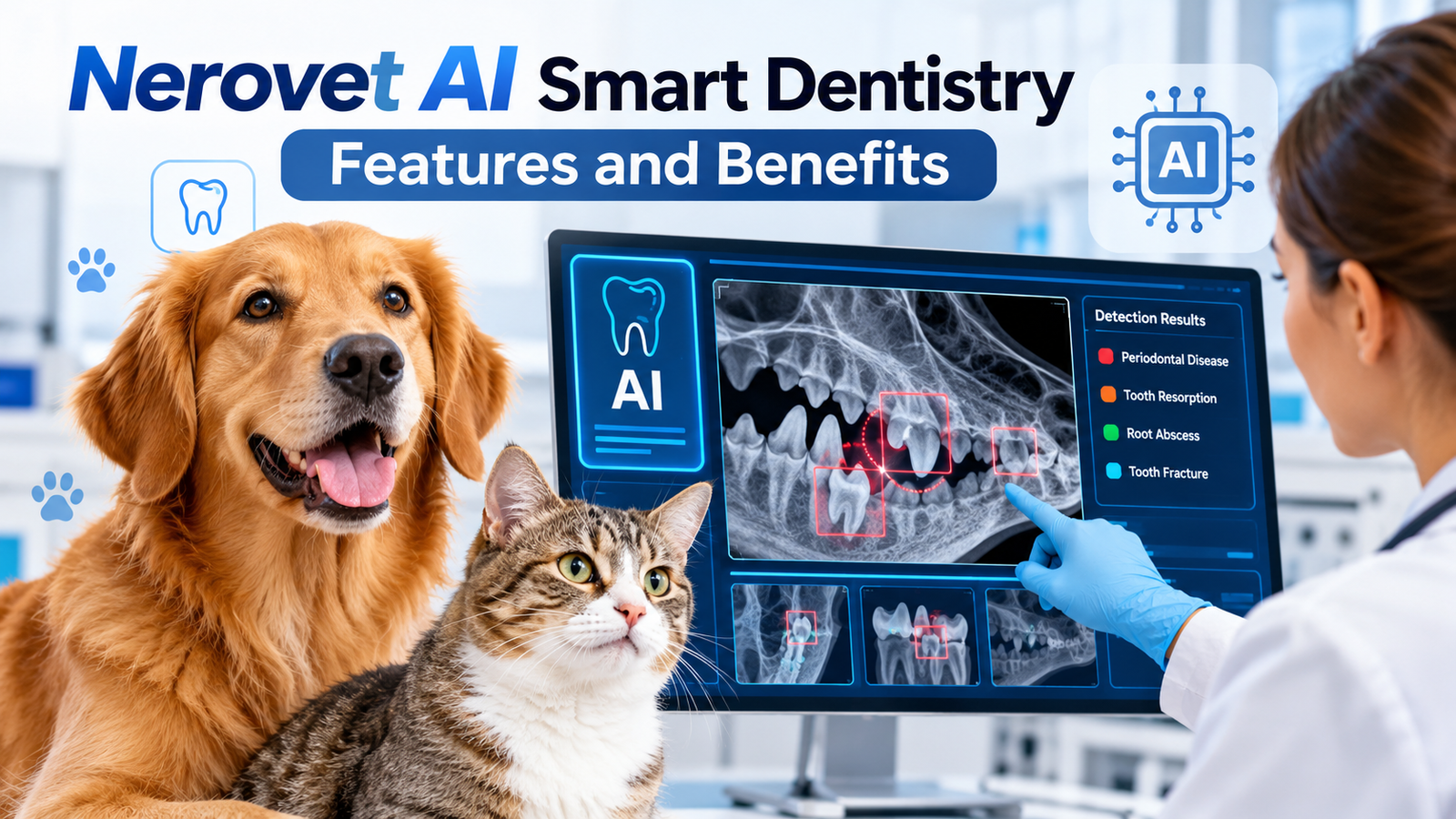
Nerovet AI smart dentistry is a term associated with artificial intelligence for dental health, particularly the analysis of dental images and the identification of potential oral health problems. Nerovet is described online as an AI-assisted dental platform for pets, including dogs and cats, while another website using the Nerovet AI name discusses broader dental applications.
The wider field of AI-assisted dentistry is real and increasingly relevant to clinical care. Machine learning can help analyze dental X-rays, highlight suspicious areas, and support the interpretation of complex images. These capabilities can help veterinary professionals and human dentists, depending on the software and its intended use. However, not every advertised feature has been independently validated for every product. This guide explains what Nerovet AI smart dentistry appears to offer, how dental AI works, its practical benefits and limitations, and what professionals and pet owners should check before relying on it.
What Is Nerovet AI Smart Dentistry?
Nerovet AI smart dentistry refers to AI-assisted dental technology described online under the Nerovet name. The clearest product description focuses on veterinary dentistry and the analysis of dental images for animals.
The stated goal is to help identify potential oral health problems and support veterinary assessment. Conditions discussed in the product description include periodontal disease, tooth resorption, root abscesses, and tooth fractures. These conditions can be difficult to assess fully through a quick visual inspection alone, particularly when abnormalities affect structures below the gumline.
It is important to distinguish between the product’s advertised purpose and independently established performance. Public information does not provide enough independent evidence to confirm every claimed capability, diagnostic accuracy figure, or clinical outcome attributed specifically to Nerovet.
Is Nerovet designed for people or pets?
This is one of the most important questions surrounding the name.
- Veterinary dentistry: The Nerovet website describes AI-assisted dental imaging and oral health assessment for dogs and cats.
- Human dentistry: Another website using the Nerovet AI name discusses applications such as dental image analysis, treatment planning, and workflow automation.
- Independent verification: Available information does not clearly establish whether these websites represent the same organization or whether all their described capabilities belong to a single verified product.
Therefore, readers should check the exact product and its intended use before assuming that a tool designed for animal dental care can be used for human dental diagnosis, or vice versa.
How Does Nerovet AI Smart Dentistry Work?
AI-assisted dental imaging generally relies on machine learning, a branch of artificial intelligence that identifies patterns in data. For image analysis, deep learning models can be trained using dental images that have been reviewed and labeled by qualified professionals.
Nerovet’s public product description refers to AI analysis of pet dental X-rays and images. However, the precise model architecture, training dataset, and independent validation results are not sufficiently documented to establish exactly how its system performs internally.
A typical AI-supported veterinary dental workflow involves several stages.

1. Collect dental images
A veterinary professional obtains appropriate dental X-rays or other supported images. Image quality matters because poor positioning, blur, or incomplete coverage can affect interpretation.

2. Process the images
The software processes compatible images and searches for patterns associated with dental abnormalities. The exact Nerovet file formats, equipment requirements, and technical specifications should be confirmed with the provider.

3. Identify potential concerns
Depending on the system’s verified capabilities, AI may flag suspicious regions for closer examination. A flagged area is a finding to investigate, not proof of a disease.

4. Review the results and decide on treatment
The veterinarian combines the software’s output with the animal’s medical history, oral examination, and diagnostic findings before deciding what care is necessary.
The final step is essential. Dental radiographs can reveal abnormalities below the gumline that are not visible during an ordinary oral examination. AI can potentially assist with interpretation, but it does not replace appropriate imaging or a complete veterinary assessment.
Key Features Associated With Nerovet AI Smart Dentistry
The public product description focuses on veterinary dental care. The following table separates advertised capabilities from broader applications of dental AI that should not automatically be attributed to this particular product.
| Capability | What it means in practice |
|---|---|
| Dental image analysis | The advertised platform analyzes pet dental images and X-rays. |
| Potential disease detection | The product description mentions identifying conditions such as periodontal disease and tooth resorption. |
| Fracture and abscess assessment | These conditions are mentioned in the product description, but independent performance data has not been established. |
| Visual reporting | Visual information may help professionals explain findings, although the exact reporting functions need verification. |
| Clinical decision support | AI can help organize findings for review, but a veterinarian must determine their clinical significance. |
Does it offer treatment planning and automated clinic management?
These functions are often discussed in articles about human dental AI, including automated documentation, patient management, orthodontic planning, and implant assessment. However, descriptions of other platforms are not sufficient evidence that Nerovet itself provides all these functions.
Before choosing the platform, ask the provider for a current feature list, a live demonstration, supported image types, and documentation explaining which functions are available in the actual product.
What Dental Problems Can AI Help Identify?
The usefulness of dental AI depends on the type of image, the condition being assessed, and the model’s clinical validation. Veterinary dentistry also differs from human dentistry because animal species have different dental anatomy and disease patterns.
Periodontal disease
Periodontal disease affects the tissues supporting the teeth, including the gums and surrounding bone. Dental radiographs can help reveal bone loss and other abnormalities that may not be obvious during a visual examination.
An appropriately validated AI system may help flag suspicious regions for review. It cannot determine the full severity of disease from an isolated image without considering the wider clinical picture.
Tooth resorption in cats
Tooth resorption is a painful condition in which dental tissues break down. Cats can develop lesions that are difficult to identify through visual examination alone.
Dental X-rays are important for assessing the affected tooth and its roots. AI-assisted analysis may help direct attention to suspicious changes, provided the tool has been validated for feline dental images.
Tooth fractures and root abscesses
Fractures can expose sensitive inner tooth structures, while infection around a tooth root can lead to pain and tissue damage. Dental imaging can provide important evidence when these conditions are suspected.
An AI tool may assist with image review, but its output should not be treated as a definitive diagnosis. The veterinarian must assess the animal and decide whether additional imaging, treatment, or referral is necessary.
These applications reflect established principles of veterinary dental imaging, not independently confirmed accuracy claims for Nerovet specifically.
Benefits of Nerovet AI Smart Dentistry
AI-assisted dental tools can offer practical advantages when they are well designed, appropriately validated, and integrated into clinical workflows.
- More structured image review: Highlighting potential abnormalities may help clinicians review images systematically.
- Support for early investigation: Flagged findings can prompt closer examination of possible dental problems.
- Clearer communication: Visual explanations can help pet owners understand why a veterinarian recommends further investigation or treatment.
- Workflow assistance: Well-integrated software may reduce repetitive image-review or documentation tasks.
- Consistent review processes: AI can apply the same trained detection approach across multiple images, although its results can still vary with image quality and the cases encountered.
The wider dental industry recognizes the potential of AI in diagnostics, imaging, patient engagement, and clinical decision support. Responsible implementation still requires attention to safety, transparency, fairness, and professional oversight.
The key benefit is assistance rather than automatic certainty. A well-used system can help a professional examine evidence, but the technology’s value depends on whether it improves decisions in real clinical settings.
Limitations and Risks You Should Know
Nerovet AI smart dentistry should be evaluated carefully because the public evidence about the specific product remains limited.
1. Accuracy claims need independent validation
Nerovet’s website advertises high diagnostic accuracy. However, a headline percentage does not establish how well a system performs across different animals, image types, diseases, or clinical settings.
Before relying on a stated accuracy rate, look for independently reviewed validation studies that explain the sample size, reference diagnoses, sensitivity, specificity, and testing conditions.
2. AI can miss abnormalities
A model may fail to flag a genuine problem or may mark a normal anatomical feature as suspicious. These errors can result from image quality, uncommon conditions, differences between species, or limitations in the data used to train the model.
A negative AI result should never be used by itself to rule out dental disease.
3. Privacy and data security matter
Dental images and clinical records can contain sensitive information. Clinics should understand where images are stored, who can access them, whether data is used for model training, and how long it is retained.
Before uploading patient or client information, review the provider’s privacy policy, security measures, and data-processing terms.
4. Product availability and regulatory status need checking
The available public information does not establish a complete, independently verified picture of Nerovet’s regulatory status, clinical validation, or commercial availability. Requirements also vary by country and intended use.
For products marketed as clinical decision-support or diagnostic software, verify applicable regulatory requirements rather than assuming that an online demonstration establishes clinical suitability.
Nerovet AI Smart Dentistry vs. Traditional Dental Assessment
AI and traditional assessment are not competing approaches that must be used separately. The most useful comparison is between professional assessment alone and professional assessment supported by a properly validated AI tool.
| Factor | Traditional assessment | AI-assisted assessment |
|---|---|---|
| Clinical judgment | Provided by a qualified professional | Still required |
| Image interpretation | Performed by the professional | May be supported by automated image analysis |
| Physical examination | Essential when indicated | Cannot be replaced by image analysis |
| Potential missed findings | Depends on the case, image quality, and professional assessment | AI may flag overlooked areas but can also miss findings |
| Diagnostic responsibility | Rests with the treating professional | Remains with the treating professional |
| Evidence requirements | Established clinical standards apply | Product-specific validation is also important |
For veterinary dentistry, a proper examination and appropriate dental radiographs remain central to diagnosis. AI may provide an additional layer of review, but it should not be treated as a replacement for either.
Who Should Consider Nerovet AI Smart Dentistry?
The appropriate audience depends on the platform’s confirmed functionality.
Veterinary clinics: Practices interested in AI-assisted pet dental imaging should request a demonstration and determine whether the software supports their species, equipment, and clinical workflow.
Veterinary dental specialists: Specialists may be interested in validated tools that support image review, case documentation, or quality assurance. They should assess performance using clinically relevant cases rather than relying solely on vendor demonstrations.
Pet owners: Owners can learn about AI-assisted dental care and ask their veterinarian whether any diagnostic support tools are used. They should not assume that a consumer-facing image checker can replace an in-person examination.
Human dental professionals: Dentists should verify that a product is explicitly designed and validated for human dentistry before considering it for clinical use. Veterinary-focused software should not be assumed suitable for human patients.
How to Evaluate Nerovet Before Using It
If you are considering Nerovet AI smart dentistry for a clinic or as a pet owner, use a practical verification checklist.
- Confirm whether the product is for veterinary or human dentistry.
- Request evidence from independent clinical validation studies.
- Check supported species, image types, and equipment compatibility.
- Ask about false negatives, false positives, and known limitations.
- Review data storage, privacy, retention, and deletion policies.
- Verify pricing, trial terms, availability, and applicable regulatory status.
A provider should be able to explain the product’s intended use, the evidence supporting its claims, and the safeguards around clinical data. If those answers are unclear, delay adoption until the uncertainties have been resolved.
What Is the Future of AI in Smart Dentistry?
AI-assisted dentistry is likely to develop through better image analysis, more consistent clinical documentation, and closer integration with digital healthcare systems. Future tools may also support more personalized assessments when reliable longitudinal data and appropriate validation are available.
However, progress will depend on more than sophisticated algorithms. Dental AI needs representative training data, transparent performance testing, privacy protections, and workflows that allow clinicians to review and challenge its output.
For veterinary dentistry, broader validation across animal species and different types of dental disease will be particularly important. A model that performs well on one set of dog X-rays may not perform equally well on feline dental images or less common conditions.
The wider industry is moving toward standards for evaluating AI quality, safety, and fairness. For Nerovet specifically, clearer product documentation and independently verifiable evidence showing how its technology performs in real clinical practice would help professionals assess its value.
Frequently Asked Questions
What is Nerovet AI smart dentistry?
It is a term associated with AI-assisted dental technology under the Nerovet name. The product description focuses on veterinary dental images and oral health assessment in pets.
Is Nerovet AI designed for humans or animals?
The Nerovet veterinary platform focuses on animals, including dogs and cats. Another website using the Nerovet AI name discusses human dentistry, so users should verify the exact product and intended audience.
Can Nerovet AI diagnose dental diseases?
The platform advertises assistance with identifying potential dental problems. Its product-specific diagnostic performance has not been independently established by the public evidence reviewed here.
Can AI replace a veterinarian or dentist?
No. AI can support image interpretation, but professional examination, clinical judgment, and appropriate diagnostic testing remain essential.
Is Nerovet AI smart dentistry free?
Current pricing and subscription terms could not be independently confirmed. Check the provider’s current pricing information before purchasing or sharing payment details.
Is Nerovet AI safe to use?
Safety depends on the product’s validation, intended use, data protection, and clinical oversight. Verify these details before relying on its output for healthcare decisions.
What should I check before using Nerovet AI?
Confirm the intended audience, independent validation evidence, supported images, privacy terms, pricing, and applicable regulatory requirements.
Conclusion
Nerovet AI smart dentistry reflects the growing interest in using artificial intelligence to support dental image analysis and oral healthcare. Its publicly described veterinary applications include identifying potential dental abnormalities in dogs and cats. Nevertheless, the available information does not establish every advertised capability or independently verify its diagnostic accuracy.
For veterinary professionals, the sensible approach is to assess the actual product, examine its clinical evidence, and determine whether it fits existing diagnostic workflows. Pet owners should continue to rely on qualified veterinary care rather than using AI results to rule out disease. Human dentists should independently verify that any tool is designed and validated for human clinical use.
Ultimately, the value of dental AI depends on reliable evidence, responsible implementation, and professional oversight not marketing claims alone.


1 comment on “Nerovet AI Smart Dentistry: Features and Benefits”